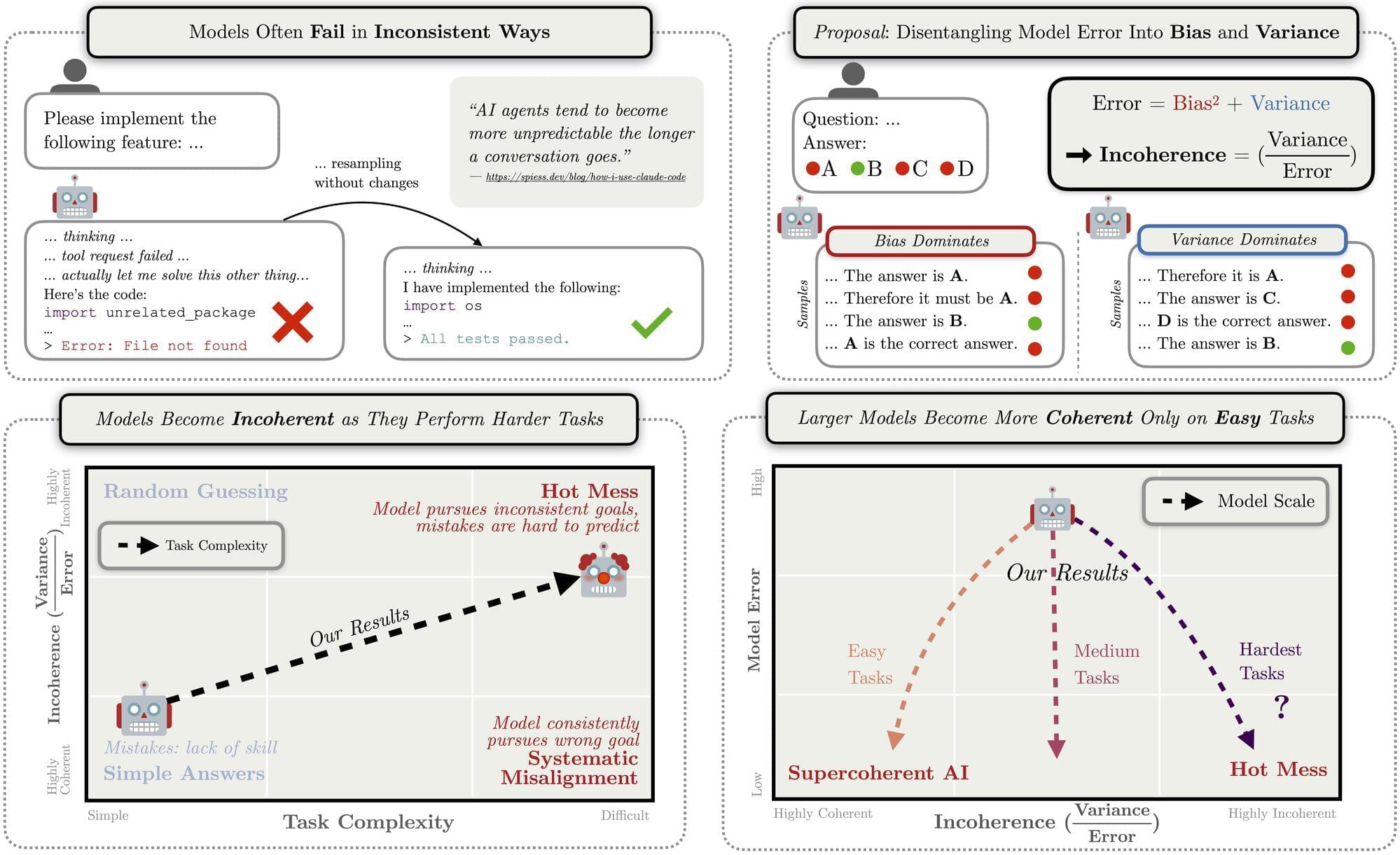
When AI systems fail, will they fail by systematically pursuing the wrong goals, or by being a hot mess? We decompose the errors of frontier reasoning models into bias (systematic) and variance (incoherent) components and find that, as tasks get harder and reasoning gets longer, model failures become increasingly dominated by incoherence rather than systematic misalignment. This suggests that future AI failures may look more like industrial accidents than coherent pursuit of a goal we did not train them to pursue.