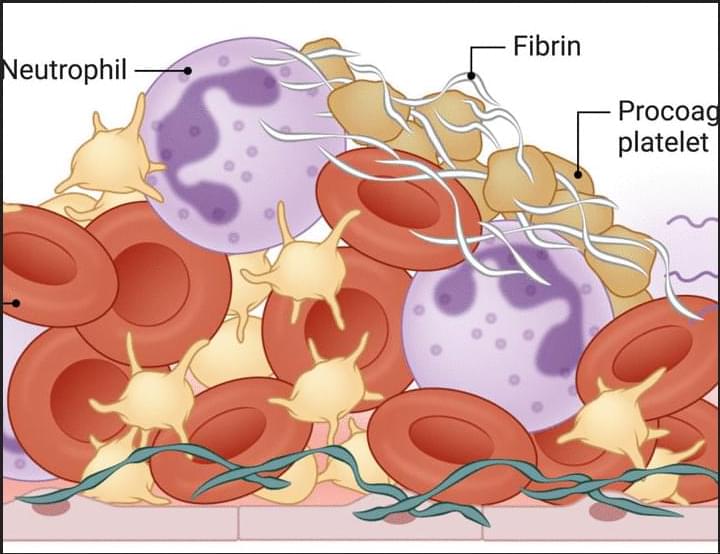
Platelets are cell fragments that plug leaks in blood vessels, preventing bleeding. However, they also form clots that impede blood flow (thrombosis) and increase inflammation.
Activated platelets, which can bind to each other, and hyporesponsive platelets, which do not form clots, are detected in patients with acute severe infections, such as COVID-19 and sepsis. How to uncouple the protective and harmful proinflammatory functions of platelets is a therapeutic dilemma.
In Science, researchers report the formation of platelet-derived integrin-and tetraspanin-enriched tethers (PITTs) in patients with severe infections.
PITTs, which are enriched in specific platelet proteins, remain anchored to the blood vessel wall (endothelium) and promote neutrophil recruitment, inflammation, and tissue damage, whereas the main platelet body shears off and reenters circulation in a hyporesponsive state. PITTs may contribute to blood clotting, immune dysregulation, and bleeding complications that characterize severe infections.
Learn more in a new Science Perspective.
Platelet-derived structures in blood vessel walls increase inflammation and bleeding risk.
Gina Perrella and Julie Rayes Authors Info & Affiliations
Science
Vol 391, Issue 6783