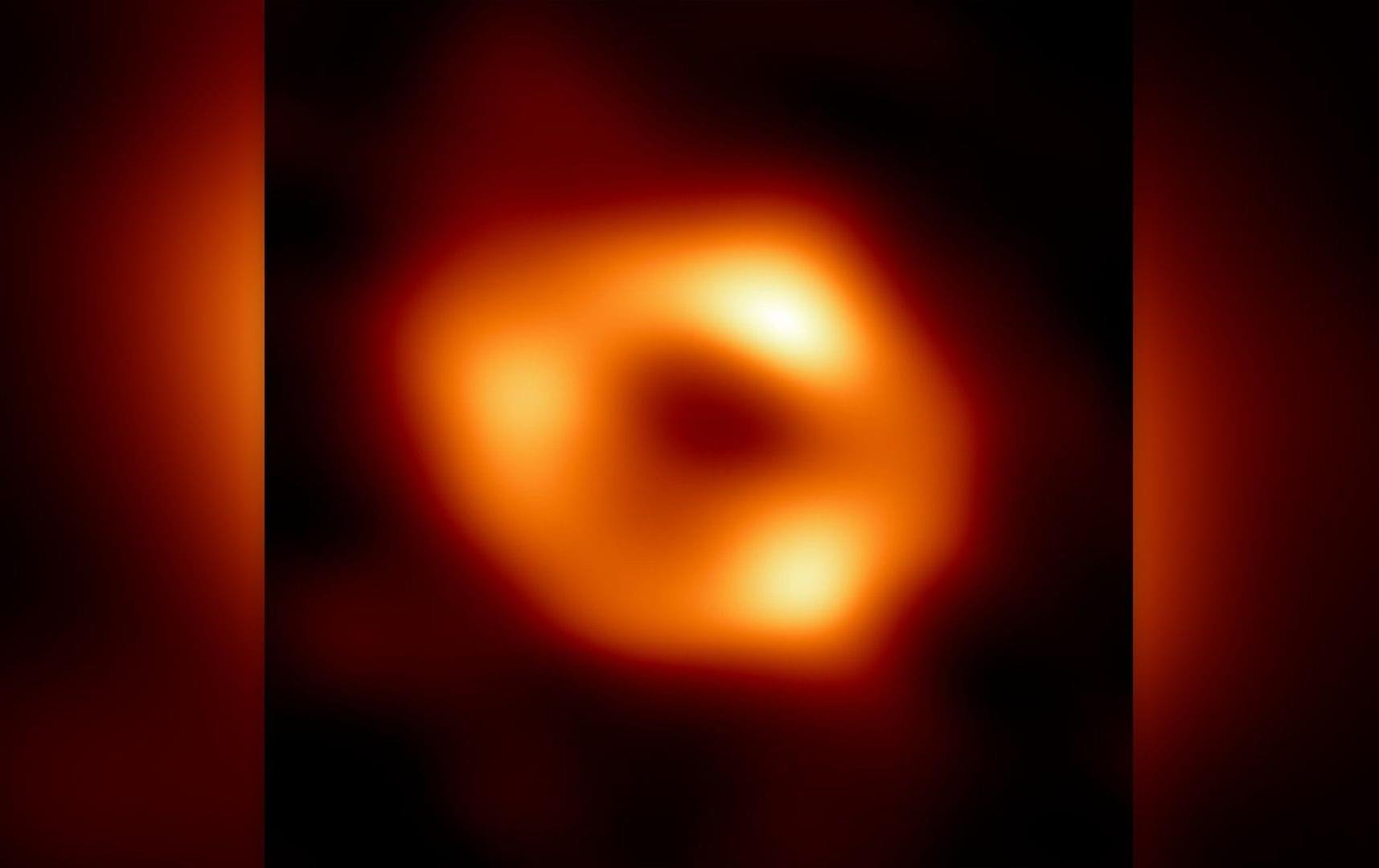
“Discovering that Sgr A is rotating at its maximum speed has far-reaching implications for our understanding of black hole formation and the astrophysical processes associated with these fascinating cosmic objects,” Xavier Calmet, a theoretical physicist at the University of Sussex who was not involved in the research, told Live Science in an email.
Related: Black holes: Everything you need to know
A black hole’s spin is different from those of other cosmic objects. Whereas planets, stars and asteroids are solid bodies with physical surfaces, black holes are actually regions of space-time bounded by an outer nonphysical surface called the event horizon, beyond which no light can escape.