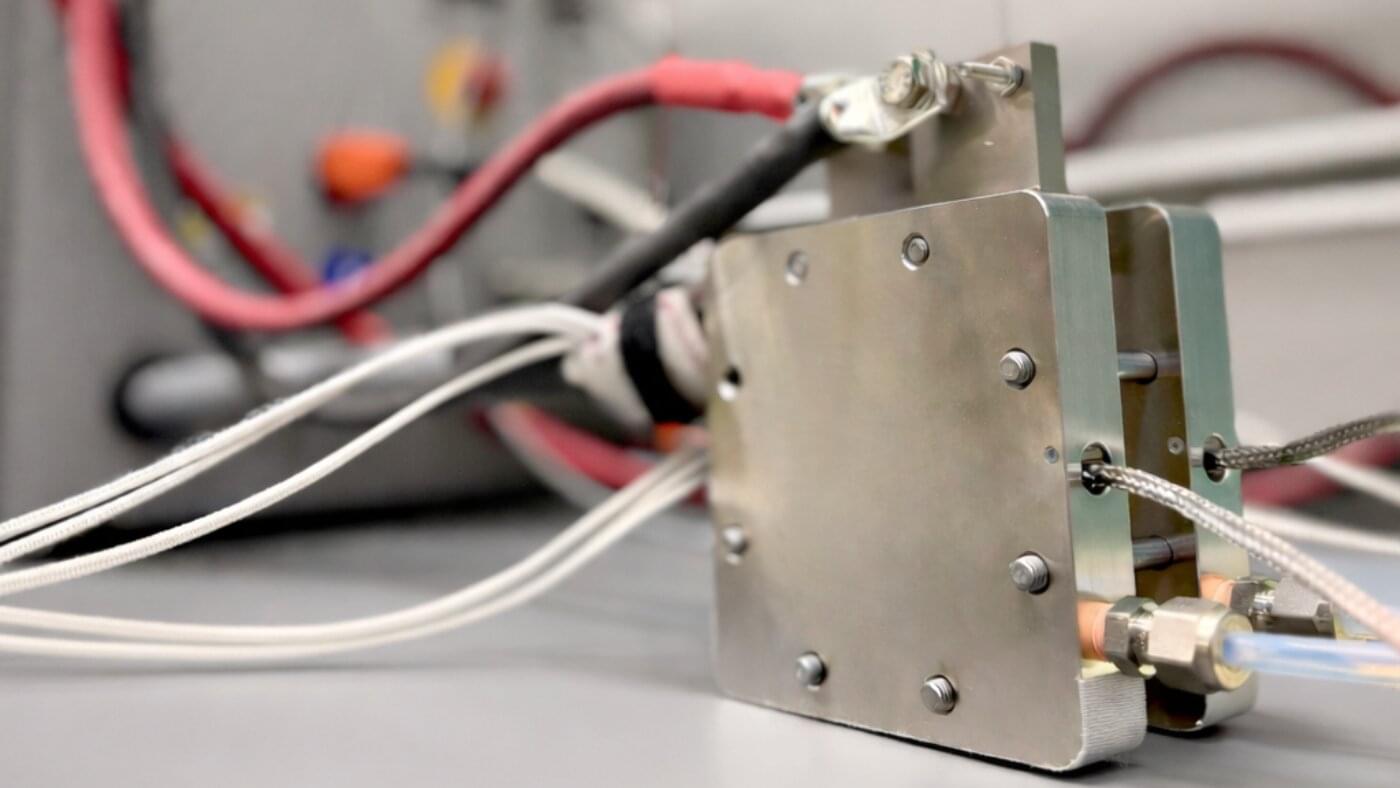
For every ton of ethylene created, one ton of carbon dioxide is produced. With more than 300 million tons of ethylene produced each year, the production system has a huge carbon footprint that scientists and engineers are eager to reduce and eventually eliminate. A new device developed in Ted Sargent’s lab at Northwestern takes a step toward breaking that cycle.
The device, an electrolyzer, has three innovations. It uses electricity to create ethylene from syngas, a waste gas produced from plastic. It uses a novel material to help catalyze the reaction. And it does so in an efficient way, reducing the overall energy needed for the system.
The results, published Feb. 17 in Nature Energy, can be used with renewable energy sources to help pave the way for a greener ethylene supply chain.