Contamination of ground, surface and drinking water by perfluoroalkyl and polyfluoroalkyl substances (PFAS) affects millions of people worldwide. A promising new method developed by Flinders University scientists paves the way to help remove the most difficult-to-capture variants of these persistent pollutants from water.
The research team, led by Flinders ARC Research Fellow Dr. Witold Bloch, has discovered adsorbents that effectively capture PFAS, including short-chain forms that are especially difficult to remove using existing technologies.
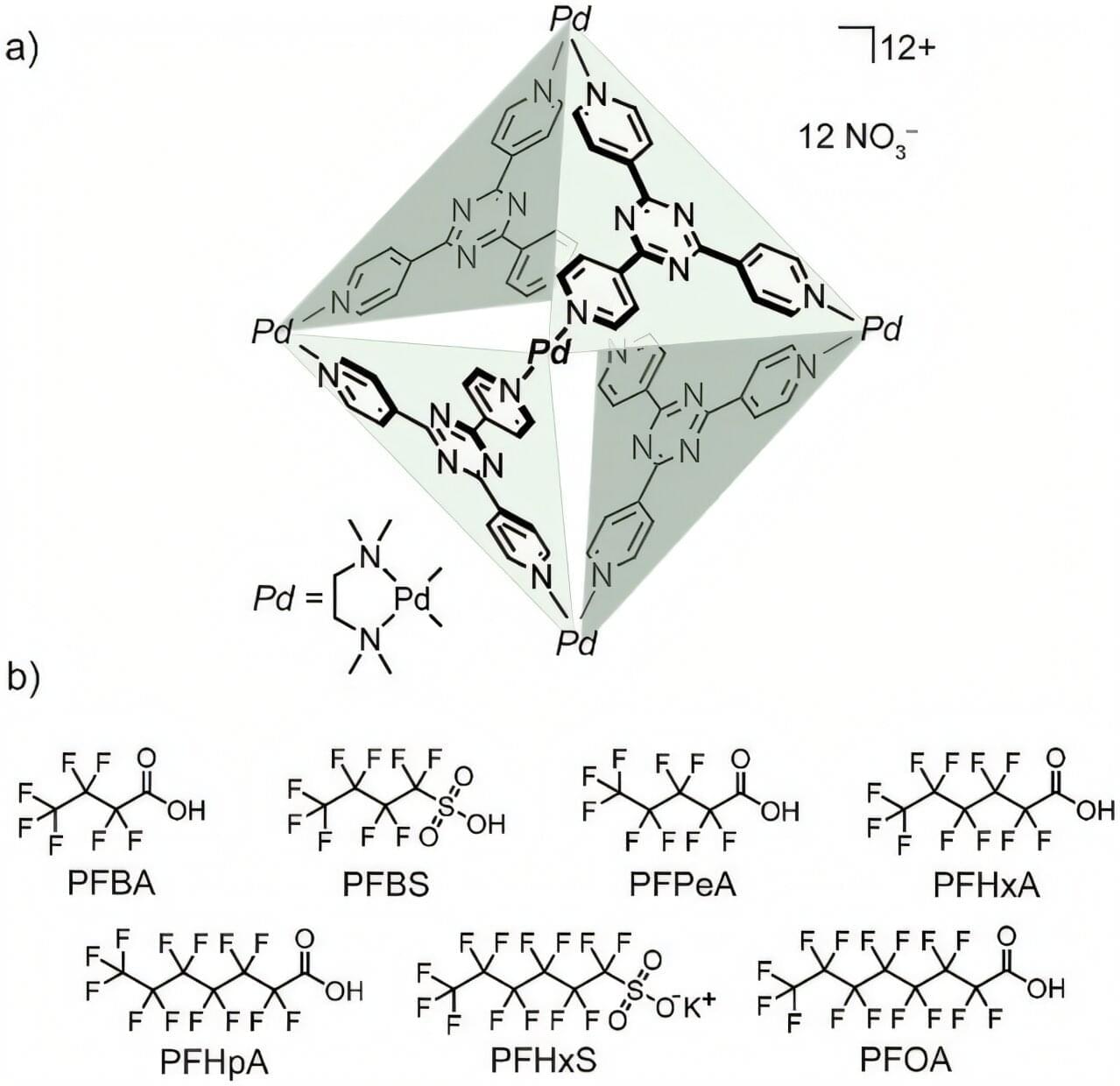
The study, published in the Angewandte Chemie International Edition, showcases the use of a nano-sized molecular cage that acts as a highly selective “PFAS trap.”