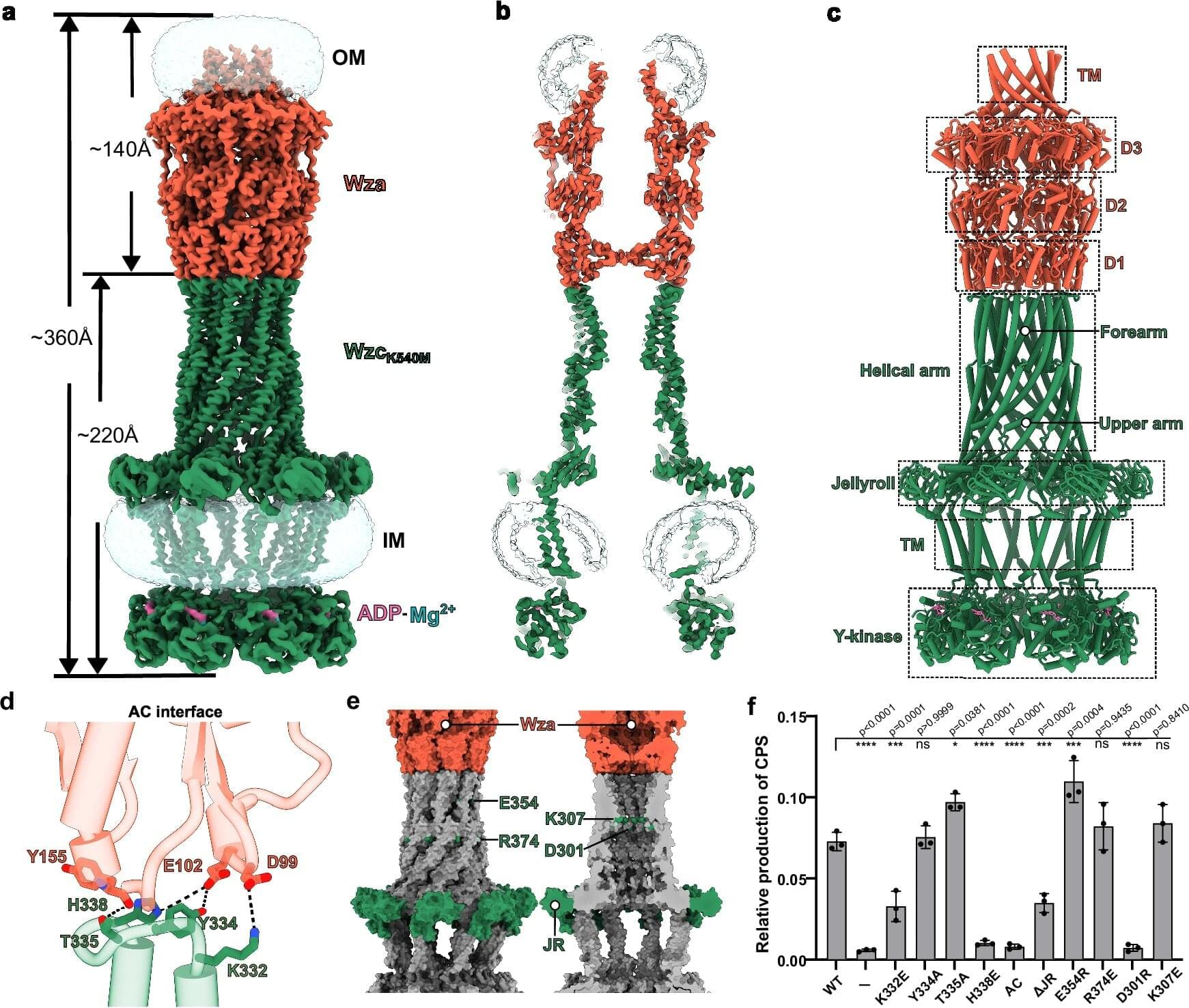
Most bacteria, including many bacterial pathogens, are surrounded by an outer protective layer of sugar molecules, known as a capsule. This primarily protects the bacteria from environmental influences, but also serves as a kind of cloak of invisibility, enabling them to evade the phagocytes of our immune system. Structural biologists at the Helmholtz Center for Infection Research (HZI) have now used cryo-electron microscopy to visualize the central Wza-Wzc protein complex, with which sugar molecules pass from the interior of the bacterial cell to the outside, in three dimensions at the atomic level for the first time.
Their investigations also show how the channel is formed and which molecular players are involved in the active transport of sugar molecules through the channel. The researchers hope that their study will help identify target structures for potential drugs that could inhibit or completely prevent the formation of the bacterial capsule in the future. This would also make such bacterial pathogens vulnerable to attack by the immune system.
The study was conducted in collaboration with researchers from the Center for Structural Systems Biology (CSSB) in Hamburg and has now been published in the journal Nature Communications.