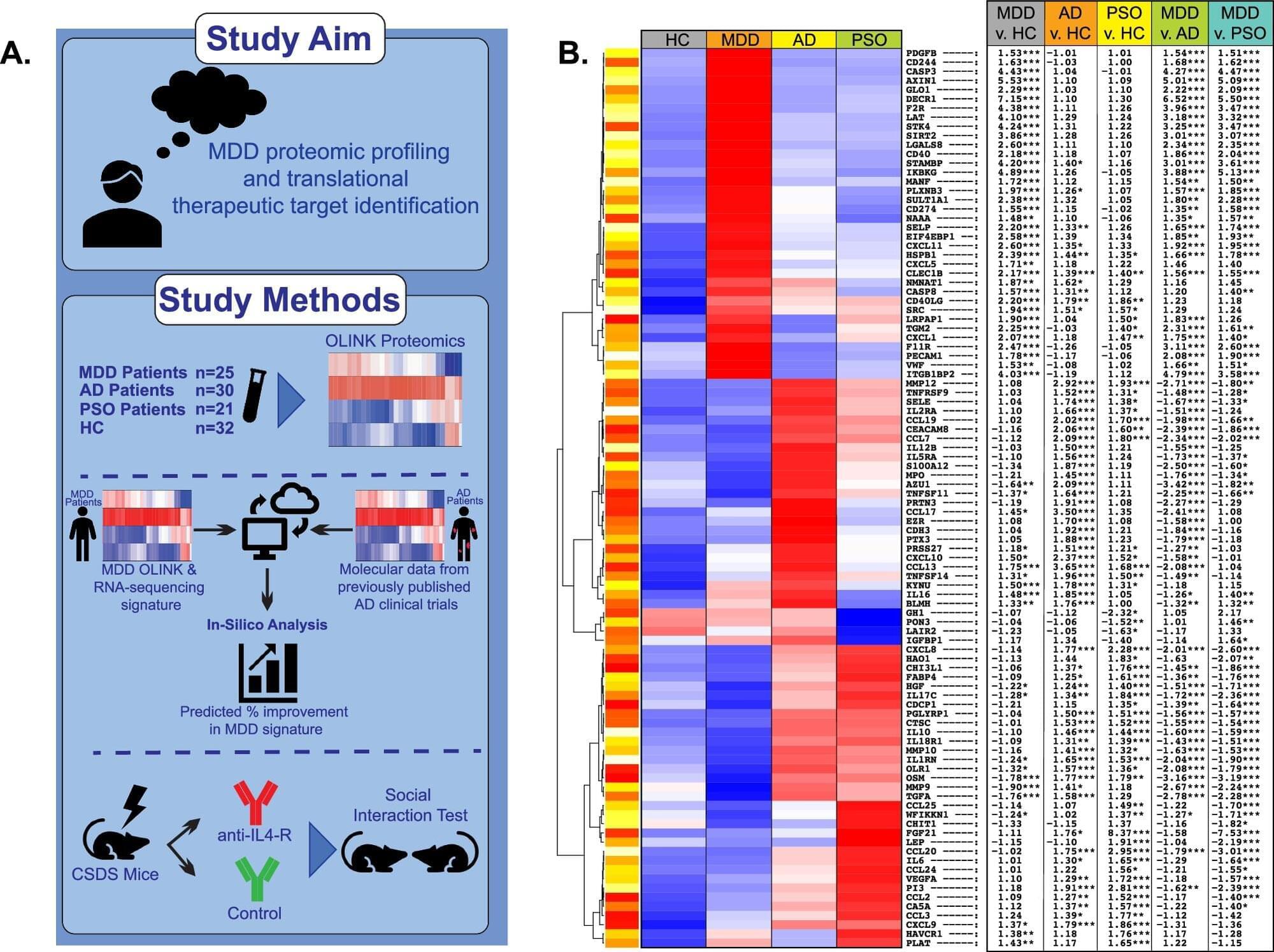
A team of leading clinical research scientists from the Departments of Psychiatry and Dermatology at the Icahn School of Medicine at Mount Sinai has found that the serum of patients with major depressive disorder shares immune abnormalities with inflammatory skin diseases, most notably the common Th2 immune pathway that is implicated in atopic dermatitis. Because these skin diseases are treatable, the findings suggest new therapeutic possibilities for psychiatric illness as well.
The study findings, published in Molecular Psychiatry, underscore the potential role of the Th2 axis in major depressive disorder and highlight the potential of targeting this specific immune pathway that involves interleukin-4 receptor alpha, a cell receptor known to play a key role in regulating inflammation, as a disease-modifying treatment for this psychiatric disorder.
Furthermore, the back-translational drug repurposing strategy employed in this study may offer a new approach to identifying immunomodulatory drugs in psychiatry.