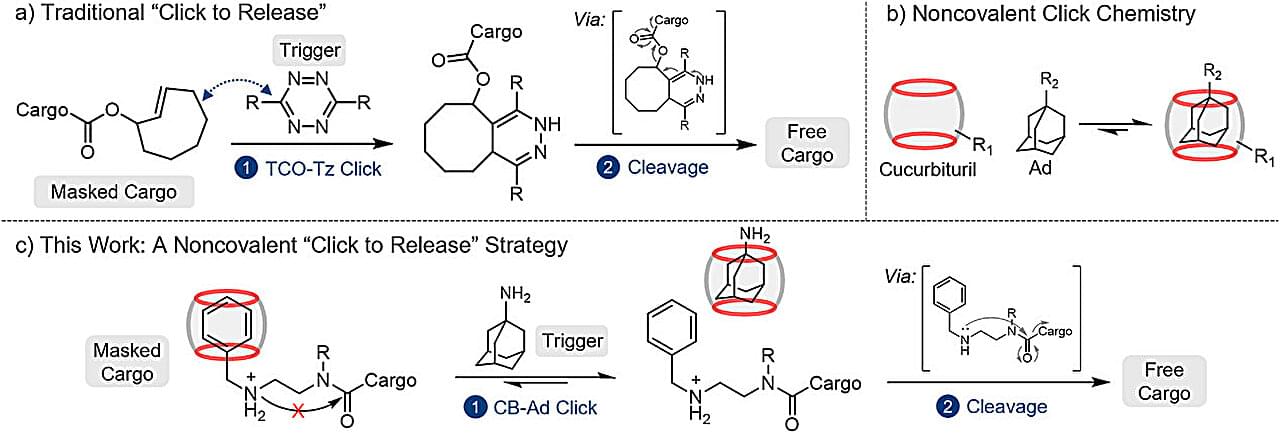
Many therapeutic molecules used in cancer treatments are highly toxic, often harming healthy tissues and causing significant side effects. This creates a critical need for strategies that localize their toxic activity to tumors. What if cancer drugs could stay dormant until they reach cancer cells? A new study by Syracuse University researchers demonstrates a promising chemistry-based strategy that could do just that.
Xiaoran Hu, assistant professor of chemistry in the College of Arts & Sciences (A&S), and his team introduced a prototyping “lock-and-key” system that holds therapeutic drugs in an inactive, caged form until a separate chemical trigger releases them at a specific site. The study was published in Angewandte Chemie International Edition. It introduces a new platform to control when and where chemical bonds break inside living systems.
“We are developing a broadly applicable tool that has the potential to regulate the activity of different types of therapeutics,” Hu says. “Think of this as a tool, like a hammer, that could be used on different nails.”