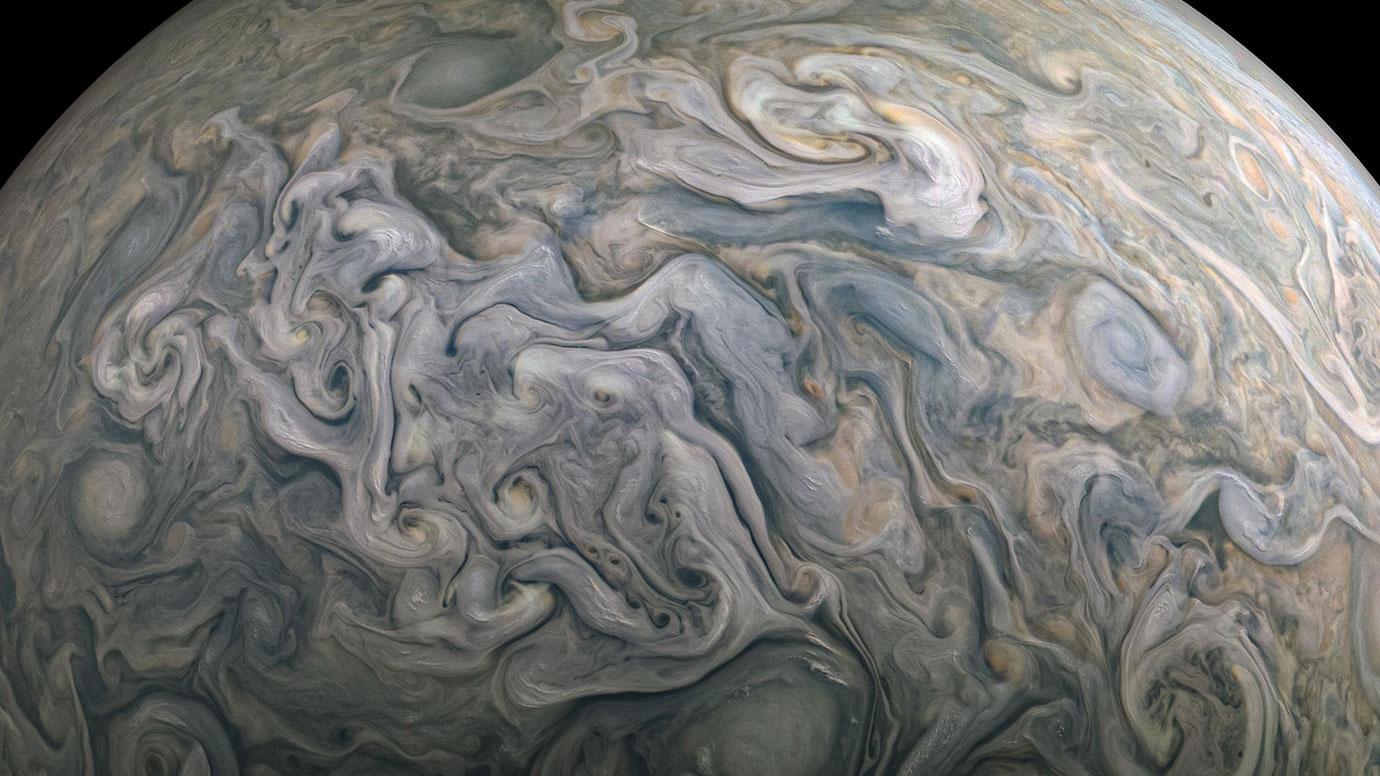
Jupiter’s swirling storms have concealed its true makeup for centuries, but a new model is finally peeling back the clouds. Researchers found the planet likely holds significantly more oxygen than the Sun, a key clue to how Jupiter—and the rest of the solar system—came together. The study also reveals that gases move through Jupiter’s atmosphere much more slowly than scientists once thought. Together, the findings reshape our understanding of the solar system’s largest planet.
Towering clouds ripple across Jupiter’s surface in dramatic patterns. Like Earth’s clouds, they contain water, but on Jupiter they are far denser and far deeper. These layers are so thick that no spacecraft has been able to directly observe what lies below them.
Now, scientists have taken a major step toward solving that mystery. A new study led by researchers at the University of Chicago and the Jet Propulsion Laboratory has produced the most detailed model of Jupiter’s atmosphere ever created. The work provides a deeper look into the planet’s interior without needing to physically descend into its crushing depths.