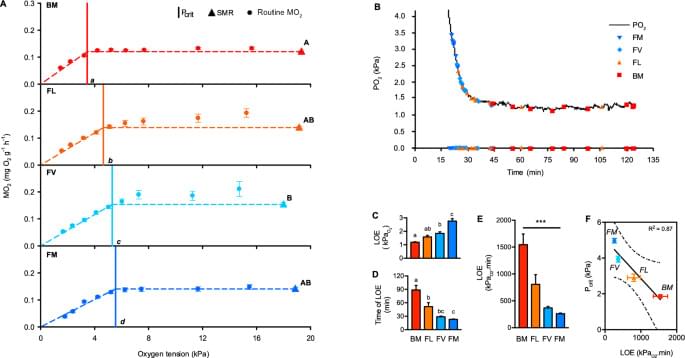
At the terminus of the O2 cascade, mitochondria play an important role in O2 utilisation and energy conservation, with adaptive modifications occasionally shared among hypoxia-tolerant species. Here, we sought to determine whether mitochondrial adaptations in brain tissue explain the hypoxia tolerance of New Zealand triplefin fishes (Tripterygiidae). We compared two intertidal species (Bellapiscis medius and Forsterygion lapillum), both likely adapted to hypoxia-reoxygenation exposures, and two subtidal species (F. varium and F. malcomi), which inhabit normoxic waters. To assess hypoxia tolerance, we determined loss of equilibrium (LOE) during hypoxia exposure and measured the critical O2 tension (Pcrit). Intertidal species displayed superior hypoxia tolerance as assessed by LOE and also had lower Pcrit (LOE versus Pcrit R2 = 0.99).