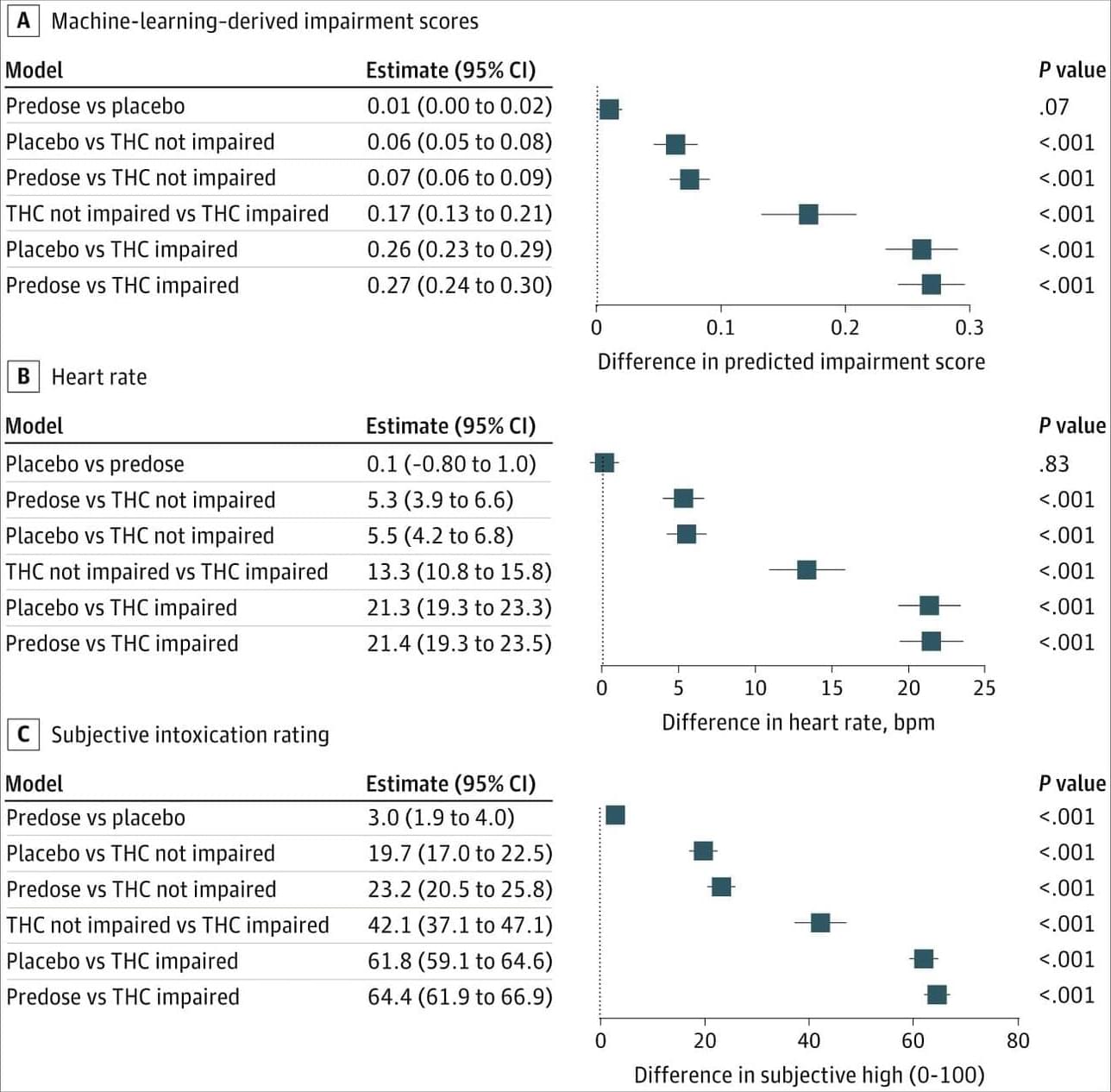
Among adults receiving oral THC, portable fNIRS scans detected impairment with higher accuracy and fewer false positives than field sobriety tests, supporting fNIRS as a more objective approach for cannabis impairment detection.
This crossover trial compares the accuracy of resting-state functional near-infrared spectroscopy vs standard field sobriety testing to detect ∆9-tetrahydrocannabinol (THC) impairment among adults who use cannabis.