Getting an up-close view of life at the cellular level can be as simple as placing onion skin under a microscope and adjusting the knobs. Peering deeper, into the heart of the atoms within, isn’t as easy. It requires peeling through layers of particle accelerator data to shed light on protons, neutrons and the subatomic processes at play.
This type of zoom doesn’t use a lens. Clarity is achieved by blending ultrafine physics measurements and theoretical predictions. Now, the first results from the KaonLT experiment at the U.S. Department of Energy’s Thomas Jefferson National Accelerator Facility are adding a new level of detail in the quest to map out how the components of atomic nuclei are put together.
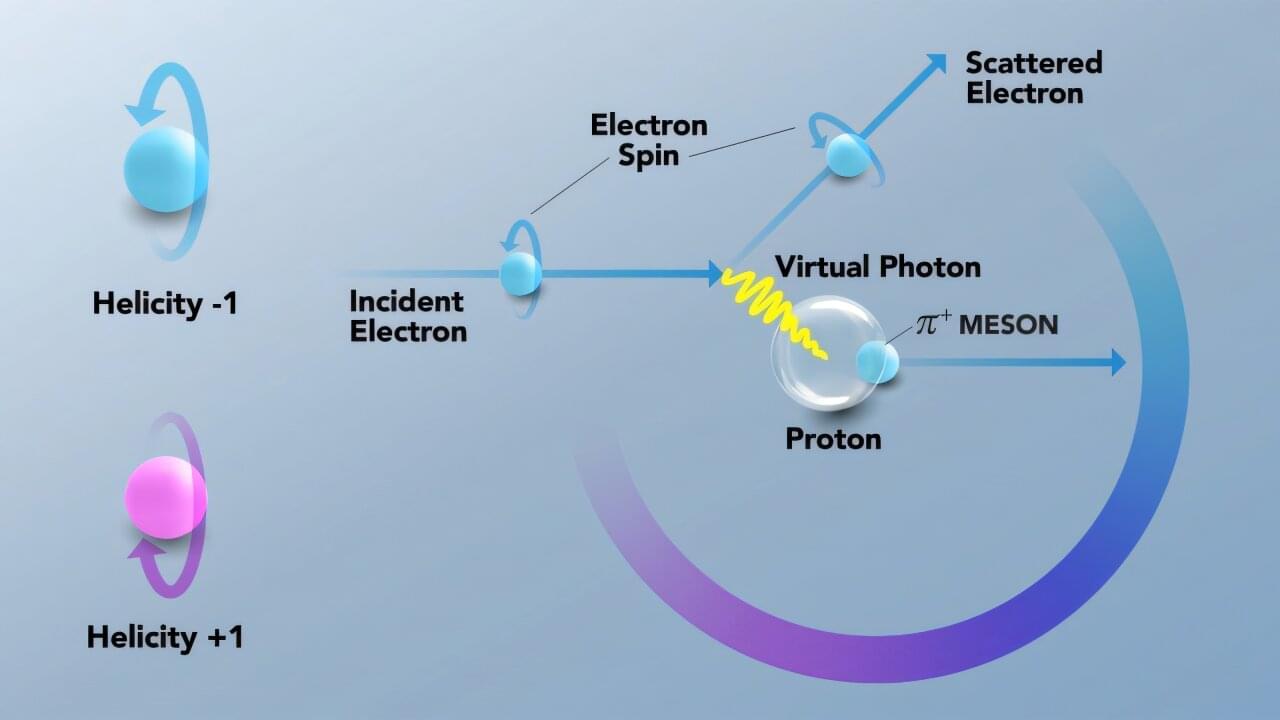
The study, published in the journal Physics Letters B, focuses on producing short-lived particles called mesons, which can provide important information about the particles and forces that form the proton.