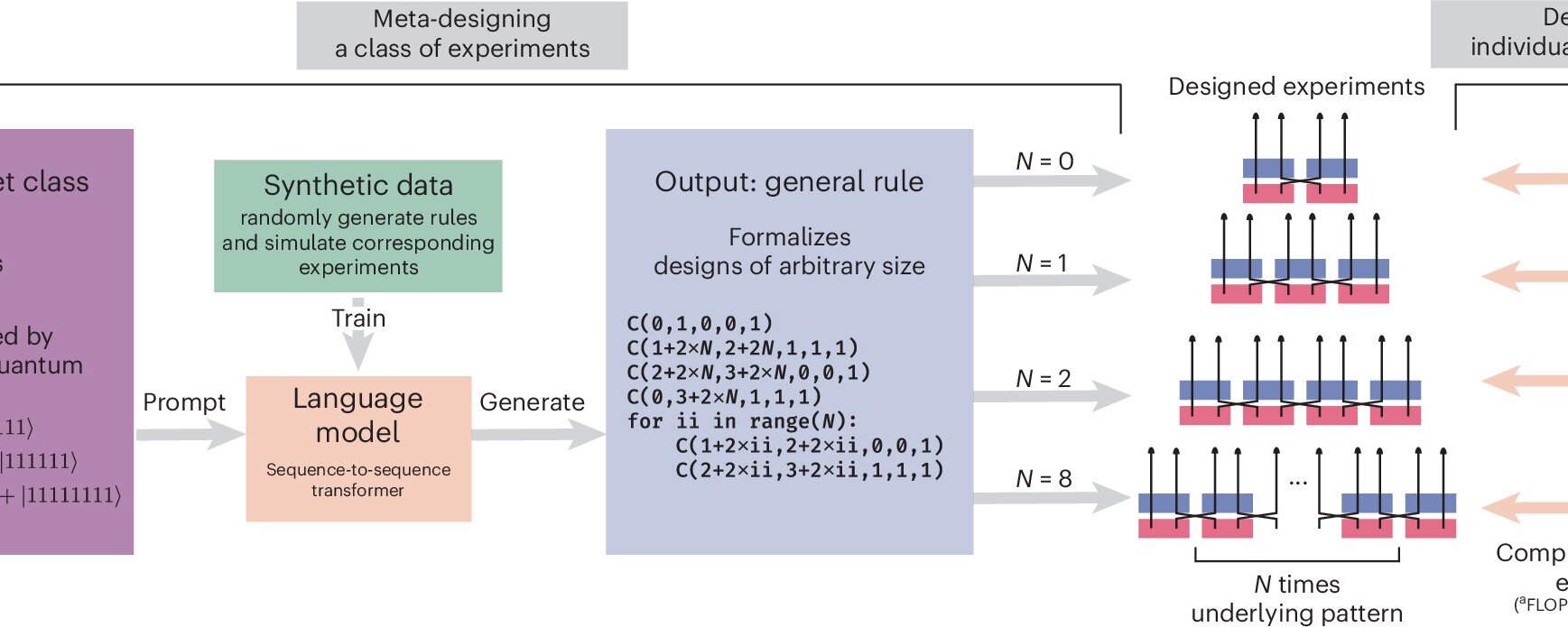
Researchers at the University of Tuebingen, working with an international team, have developed an artificial intelligence that designs entirely new, sometimes unusual, experiments in quantum physics and presents them in a way that is easily understandable for researchers. This includes experimental setups that humans might never have considered. The new AI doesn’t just create a single design proposal; instead, it writes computer code that generates a whole series of physical experiments, that is, groups of experiments with similar outputs. The study has been published in the journal Nature Machine Intelligence.
The newly developed AI uses a programming language that researchers can easily understand. This allows them to figure out the underlying idea behind the AI’s processes much more easily than before. “AI systems usually deliver their solutions without explaining how they work,” says Mario Krenn, Professor of Machine Learning in Science at the University of Tuebingen and senior author of the study. “We scientists have to try to understand the solutions afterward. This often took us days or weeks—if we understood them at all.”