Quantum technologies are anticipated to transform computing, communication, and sensing by harnessing the unusual behavior of matter at the atomic scale. Translating quantum’s promise into practical devices will require physical systems that have desirable quantum properties and can be easily manufactured. Silicon, the material behind today’s computer chips, is highly attractive as a platform because it plays to the strengths of the trillion-dollar semiconductor industry that has already been built. Identifying quantum building blocks—qubits—in silicon is, therefore, an important frontier research area.
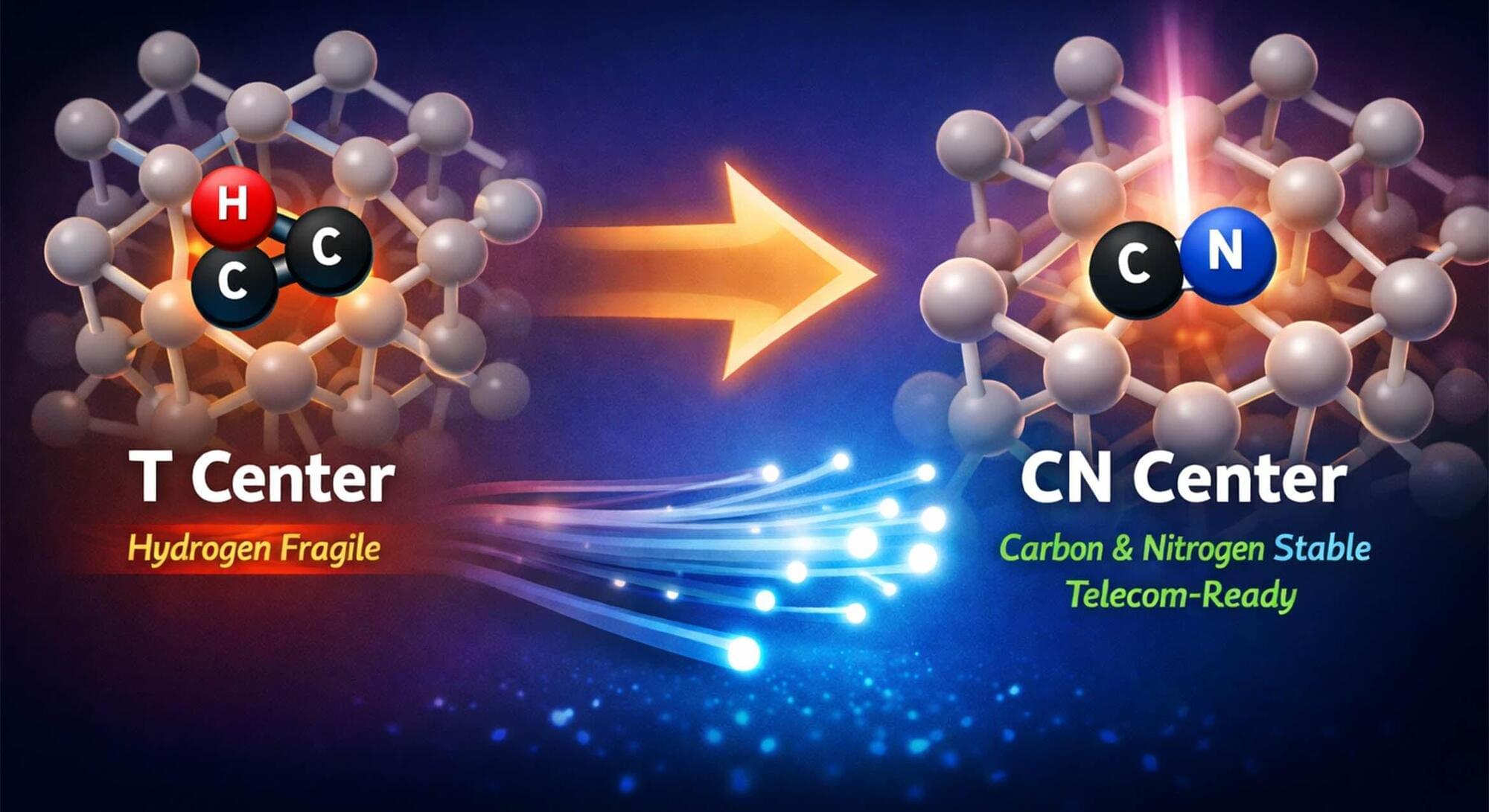
In a new study, researchers in UC Santa Barbara materials professor Chris Van de Walle’s Computational Materials Group identified a robust new qubit in silicon, called the CN center. The work is published in the journal Physical Review B.
Qubits can be based on atomic-scale defects in a crystal. A prototype example is the NV center, which consists of a nitrogen (N) atom sitting next to a vacancy (V, a missing carbon atom) in a diamond crystal. These defects can interact with both electrons and light, allowing them to emit single photons (quanta of light) that can transmit quantum information or be processed in quantum networks.