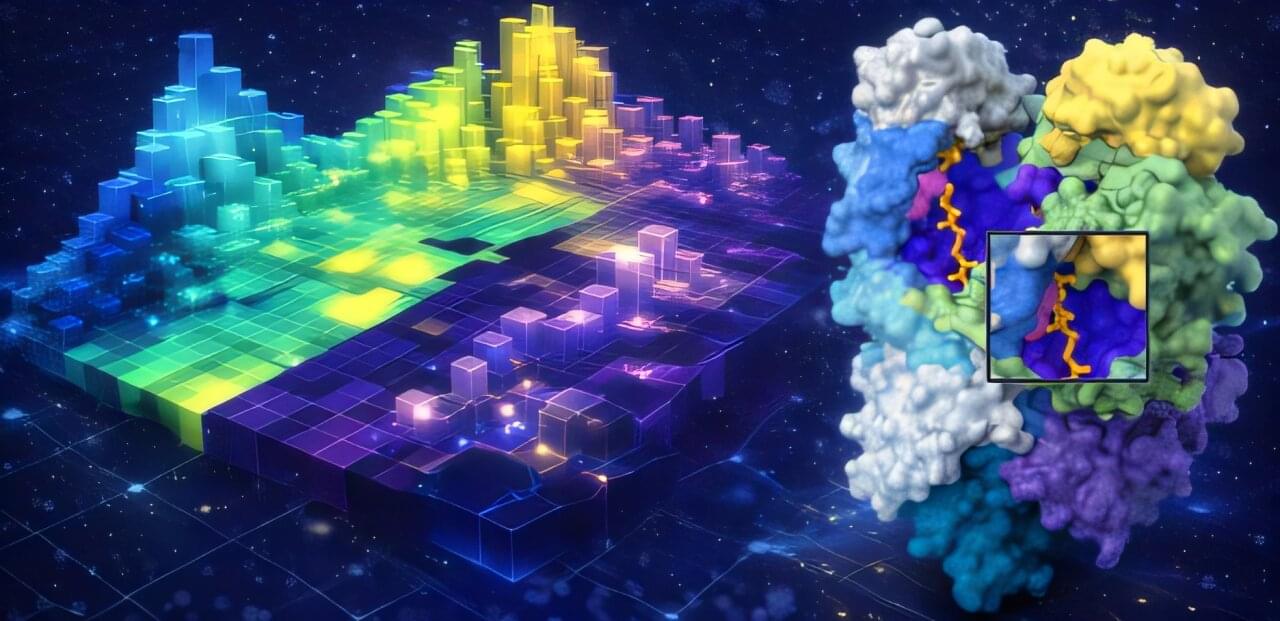
Sometimes, in genetics, two wrongs do make a right. A research team has recently shown that two harmful genetic variants, when occurring together in a gene, can restore function—proving a decades-old hypothesis originally proposed by Nobel laureate Francis Crick.
Their study, to be published in the Proceedings of the National Academy of Sciences, not only experimentally validated this theory but also introduced a powerful artificial intelligence (AI)-driven approach to genetic interpretation led by George Mason University researchers.
The project began when Aimée Dudley, a geneticist at the Pacific Northwest Research Institute (PNRI), approached George Mason University Chief AI Officer Amarda Shehu after following her lab’s work on frontier AI models for predicting the functional impact of genetic variation. That conversation sparked a collaboration that married PNRI’s experimental expertise with George Mason’s computational innovation to discover some surprising ways variant combinations can shape human health.