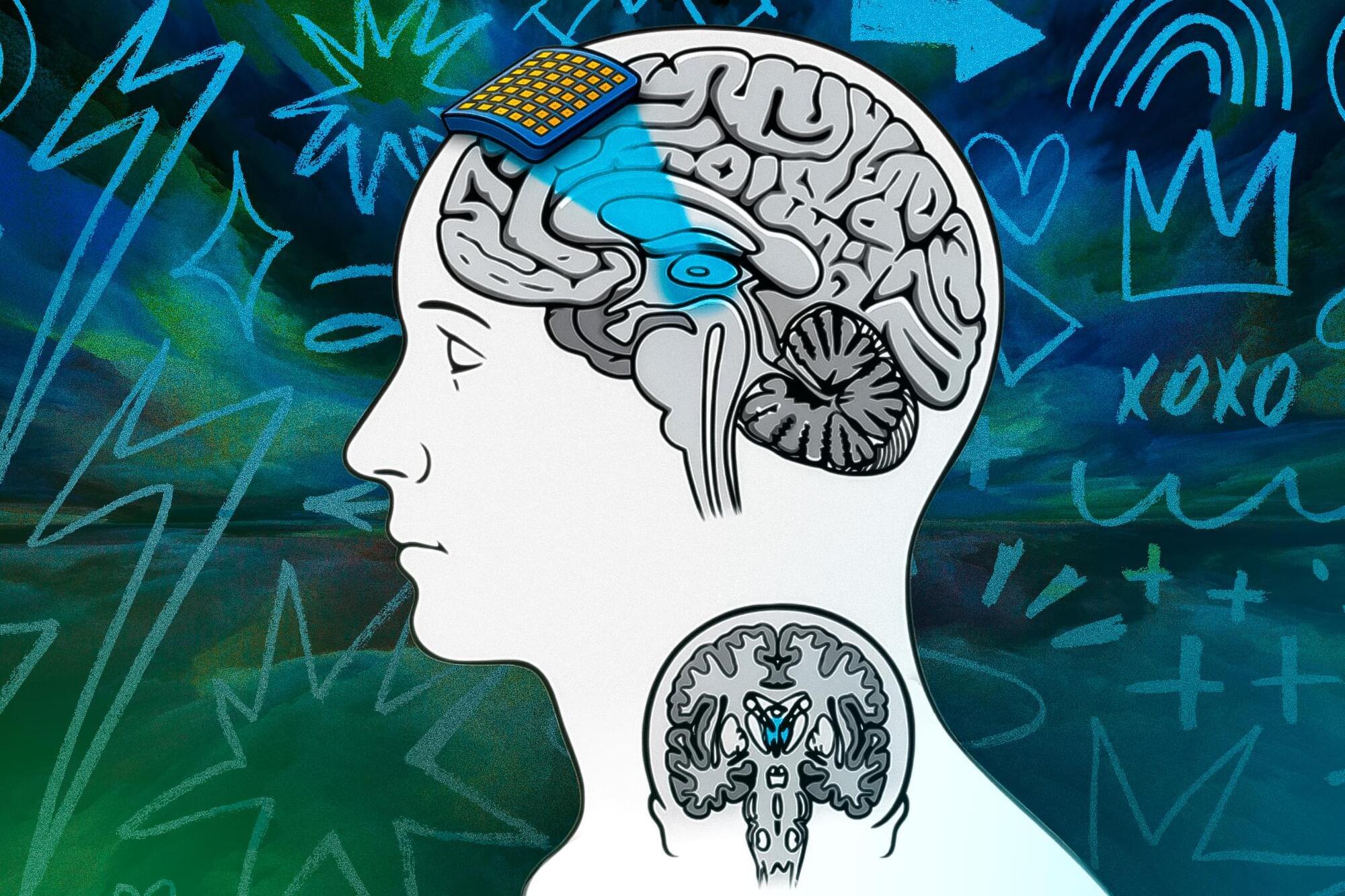
The technology has entered use in recent years, but it isn’t yet fully integrated into research. Now, two MIT researchers are planning experiments with it, and have published a new paper they term a “roadmap” for using the tool to study consciousness.
“Transcranial focused ultrasound will let you stimulate different parts of the brain in healthy subjects, in ways you just couldn’t before,” says Daniel Freeman, an MIT researcher and co-author of a new paper on the subject. “This is a tool that’s not just useful for medicine or even basic science, but could also help address the hard problem of consciousness. It can probe where in the brain are the neural circuits that generate a sense of pain, a sense of vision, or even something as complex as human thought.”
Transcranial focused ultrasound is noninvasive and reaches deeper into the brain, with greater resolution, than other forms of brain stimulation, such as transcranial magnetic or electrical stimulation.