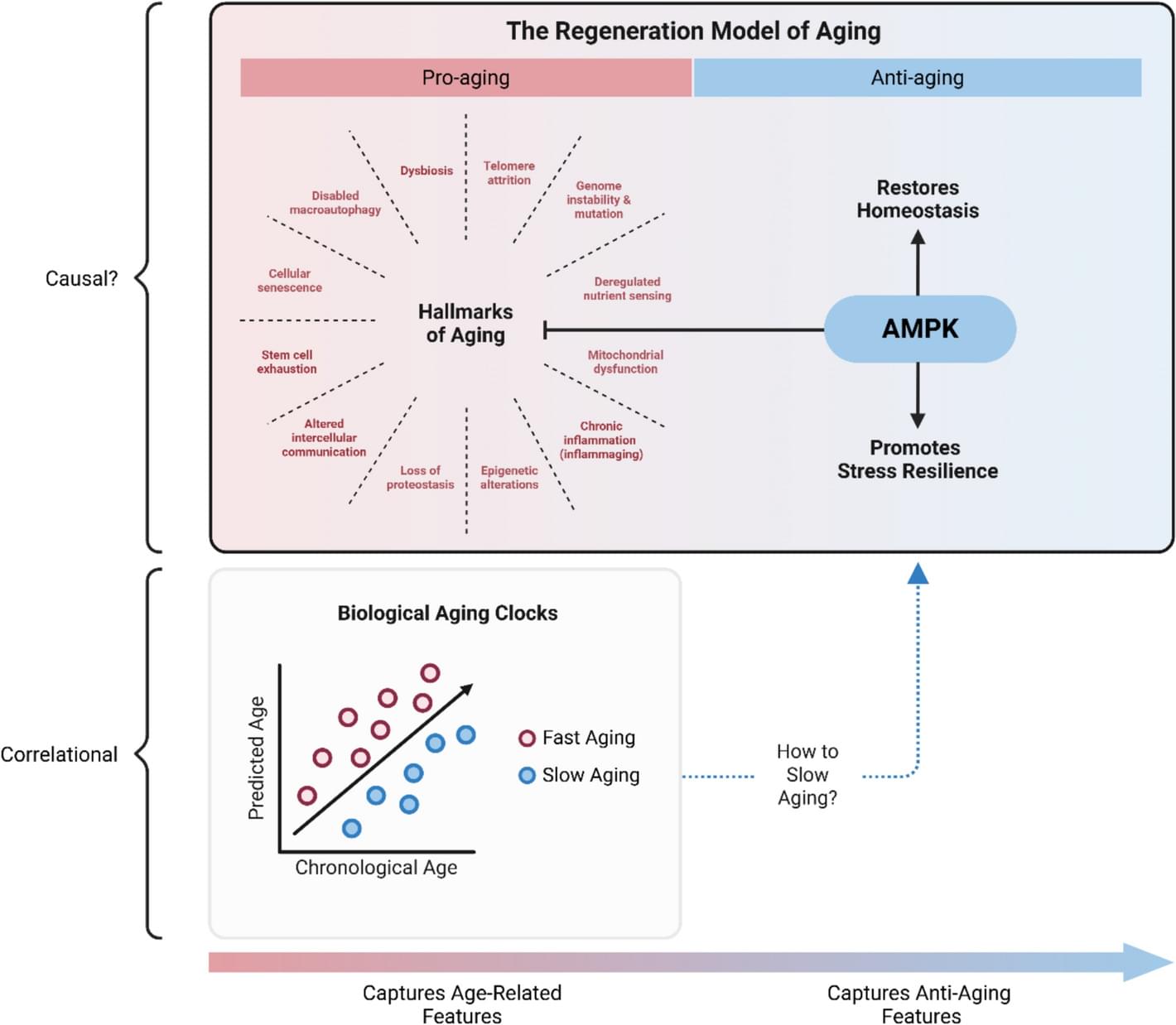
Aging is a primary risk factor for multi-morbidity and declining quality of life. The geroscience hypothesis states that targeting biological aging mechanisms may prevent or delay morbidity; however, translating theory into practice remains challenging. Unknown long-term risks and a lack of well-validated, responsive, and practical surrogate endpoints especially hinder the field’s preventive aspirations. This review addresses these obstacles by introducing the regeneration model of aging—a novel framework that integrates biological aging processes and distills the complexity of aging into a series of fundamental steps. The model provides insights into potential trade-offs of anti-aging interventions and can guide strategies to slow aging across diverse populations.