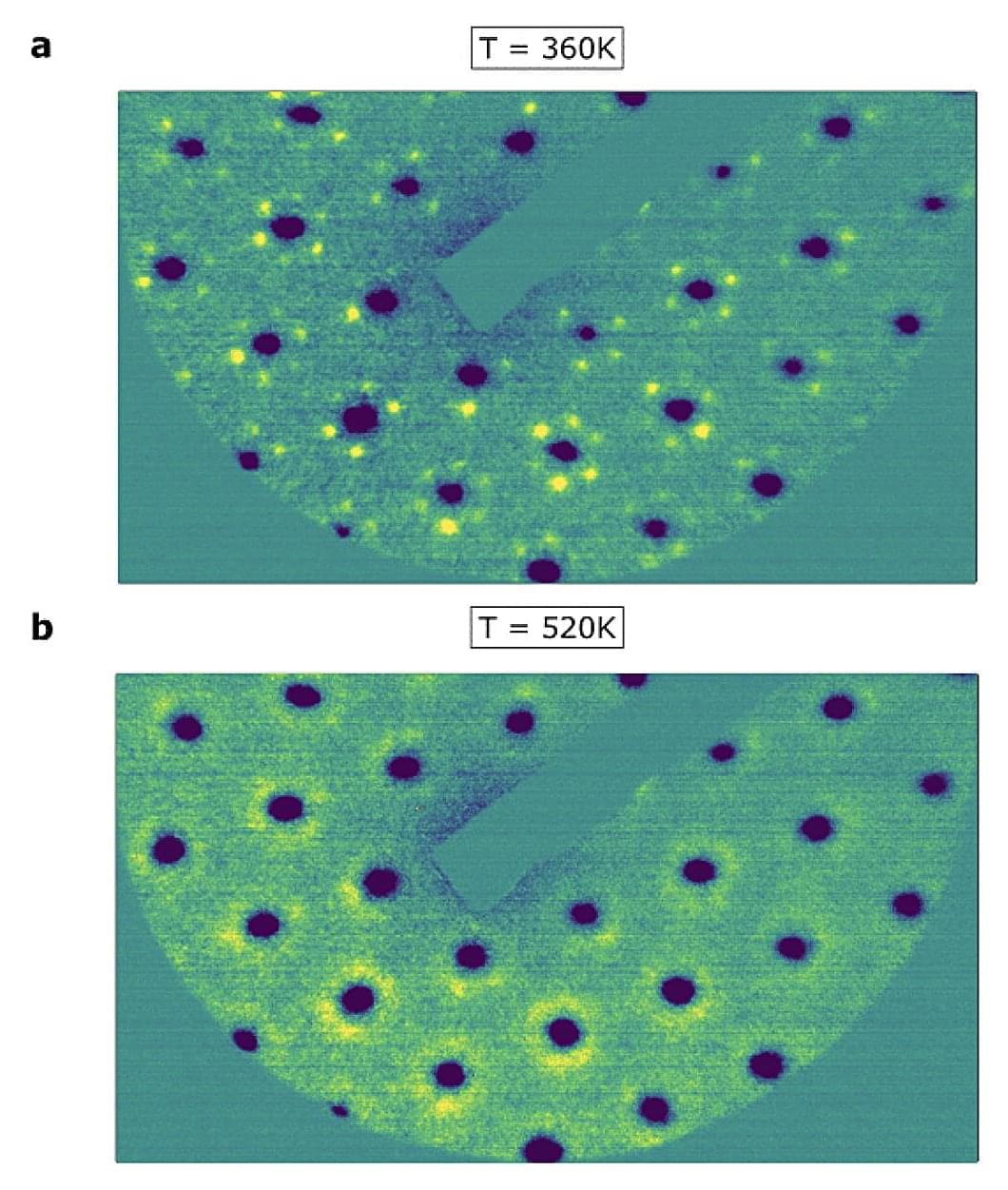
Charge density waves (CDWs) are ordered, crystal-like patterns in the arrangement of electrons that spontaneously form inside some solid materials. These patterns can change how electricity flows through materials, in some cases prompting the emergence of superconductivity or other unusual physical states.
Physics theories suggest that at certain temperatures CDWs “melt,” similarly to how conventional solids transition to a liquid state. So far, however, this transition to a liquid CDW had not yet been observed experimentally.
Researchers at University of California Los Angeles (UCLA) have gathered the first direct evidence of a CDW liquid state in the layered transition metal dichalcogenide 1T-TaS2. Their paper, published in Nature Physics, could open new possibilities for the study of hidden electronic phases in correlated physical systems.