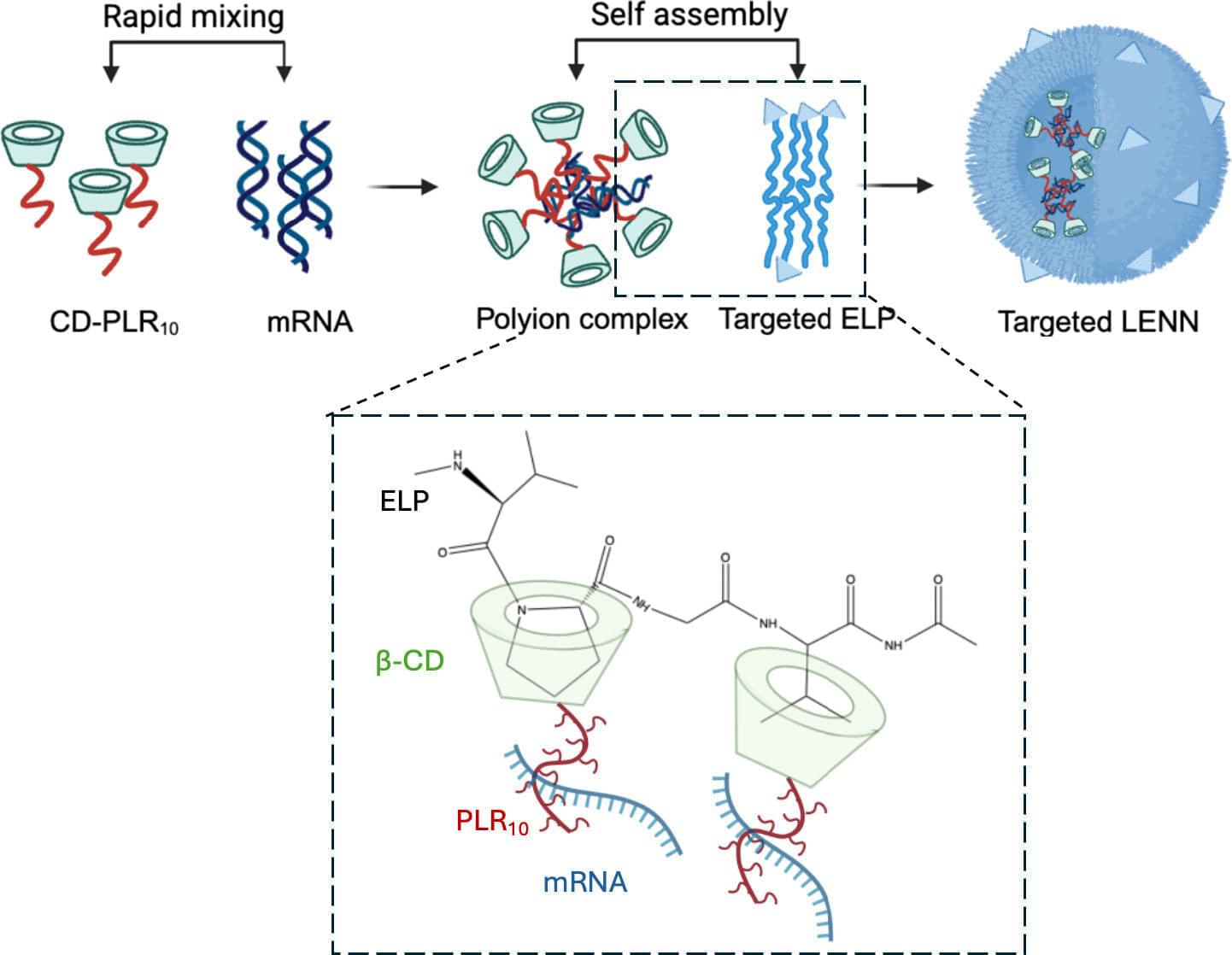
Published, peer-reviewed research shows a patent-pending, virus-mimicking platform technology developed at Purdue University improves upon traditional methods of targeting bladder cancer cells with messenger RNA (mRNA) therapies.
The study, published in the Proceedings of the National Academy of Sciences, highlights compelling features of the therapy-delivering system with respect to size, targetability, encapsulation efficiency, complex stability, gene expression and “green” manufacturability.
David Thompson led the team conducting research about layer-by-layer elastin-like polypeptide nucleic acid nanoparticle (LENN). He is a professor in the James Tarpo Jr. and Margaret Tarpo Department of Chemistry and a member of the Purdue Institute for Cancer Research and the Purdue Institute for Drug Discovery. Saloni Darji, a commercialization postdoctoral research associate, is the paper’s lead author.