Read more here.
By Tom Garlinghouse
Physicists have long known that some materials behave strangely at their edges, conducting electricity without resistance even as their interiors remain insulating. These boundary phenomena, called topological edge states, form the basis of quantum technologies and exotic “topological phases” of matter. But despite decades of study, scientists could only infer how these quantum edges behave—no one had actually seen their microscopic structure in action.
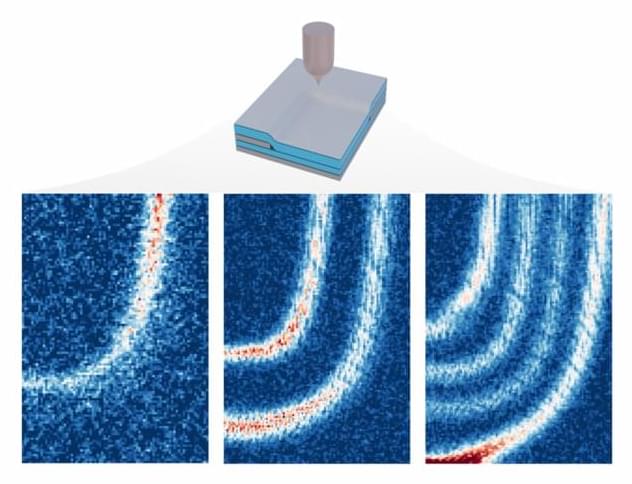
Now, a collaborative team of researchers have achieved a remarkable first: they directly imaged the internal structure of these edge states in monolayer graphene, using one of the most precise tools in modern physics—scanning tunneling microscopy (STM). Their results, published last week in Nature, reveal how fundamental interactions between electrons reshape the very edge of a quantum material, upending long-held theoretical assumptions and opening a new window onto quantum topological behavior.