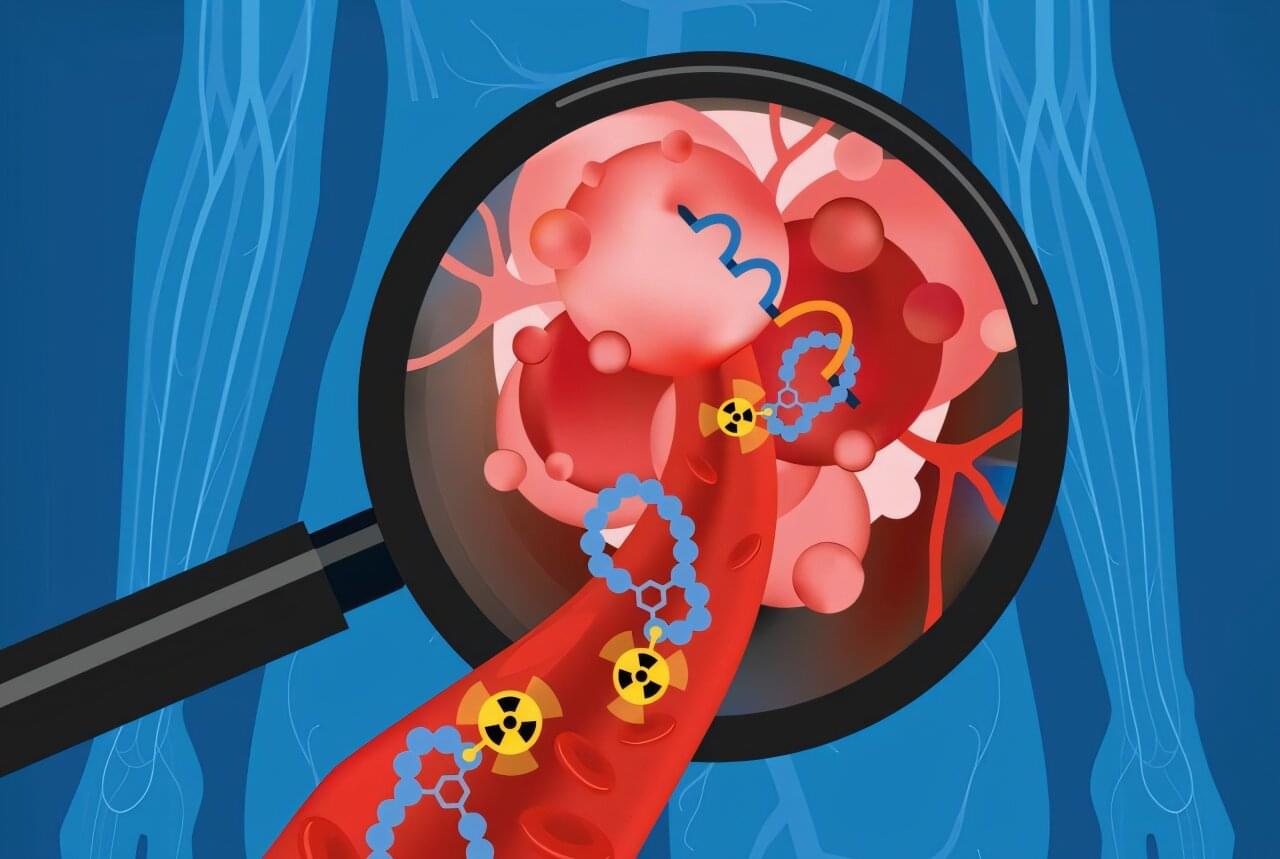
A research team at the Helmholtz-Zentrum Dresden-Rossendorf (HZDR) has developed a radiopharmaceutical molecule marker that can visualize tumors that carry the cell surface protein Nectin-4. This primarily occurs in the body in cases of urothelial carcinoma, a common form of bladder cancer.
In pre-clinical trials, the drug candidate, NECT-224, proved stable and was successfully used in humans for the first time. As the team has now reported in the Journal of Medicinal Chemistry, in the future, it could be used to better identify patients who would benefit from Nectin-4-targeted therapies.
Many modern cancer drugs only work when the target structure to which they are supposed to bind is also present on the tumor cells. In the case of urothelial carcinoma, the cell surface protein Nectin-4 lends itself to this purpose. It serves as a “door sign” for antibody-coupled agents that are able to eliminate tumor cells in a targeted fashion. But not every tumor produces the same amount of Nectin-4.