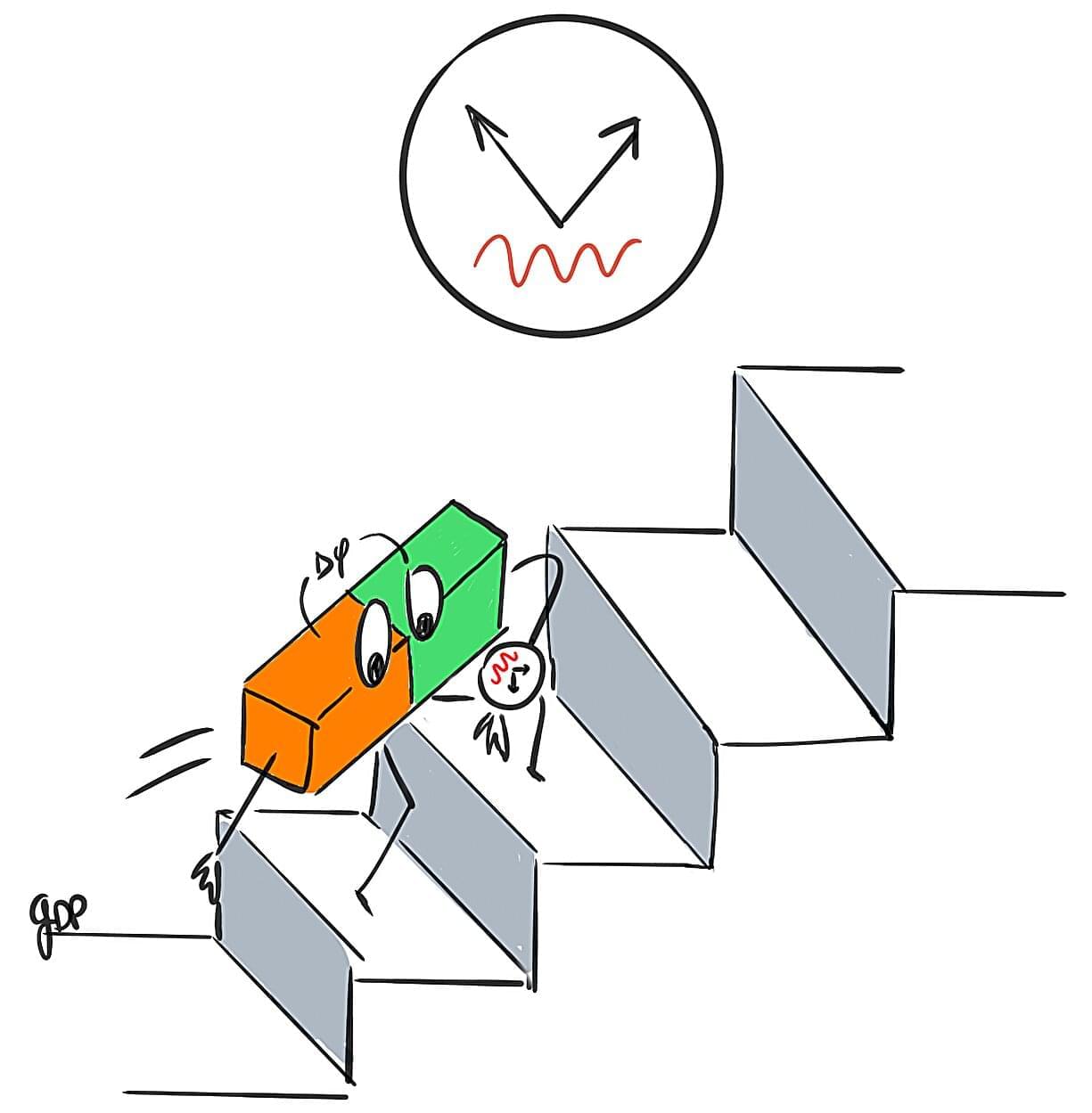
Using ultracold atoms and laser light, researchers recreated the behavior of a Josephson junction—an essential component of quantum computers and voltage standards. The appearance of Shapiro steps in this atomic system reveals a deep universality in quantum physics and makes elusive microscopic effects visible for the first time.
Josephson junctions play a central role in modern physics and technology. They enable extremely precise measurements, define the international standard for electrical voltage, and serve as essential components inside many quantum computers. Despite their importance, the quantum-scale processes occurring inside superconductors are notoriously difficult to observe directly.
To overcome this challenge, researchers at the RPTU University of Kaiserslautern-Landau turned to quantum simulation. Instead of studying electrons inside a solid material, they recreated the Josephson effect using ultracold atoms. Their approach involved separating two Bose-Einstein condensates (BECs) with an exceptionally thin optical barrier created by a focused laser beam that was moved in a controlled, periodic way. Even in this atomic system, the defining signatures of Josephson junctions emerged. The experiment revealed Shapiro steps, which are distinct voltage plateaus that appear at multiples of a driving frequency, just as they do in superconducting devices. Published in the journal Science, the work stands as a clear example of how quantum simulation can uncover hidden physics.