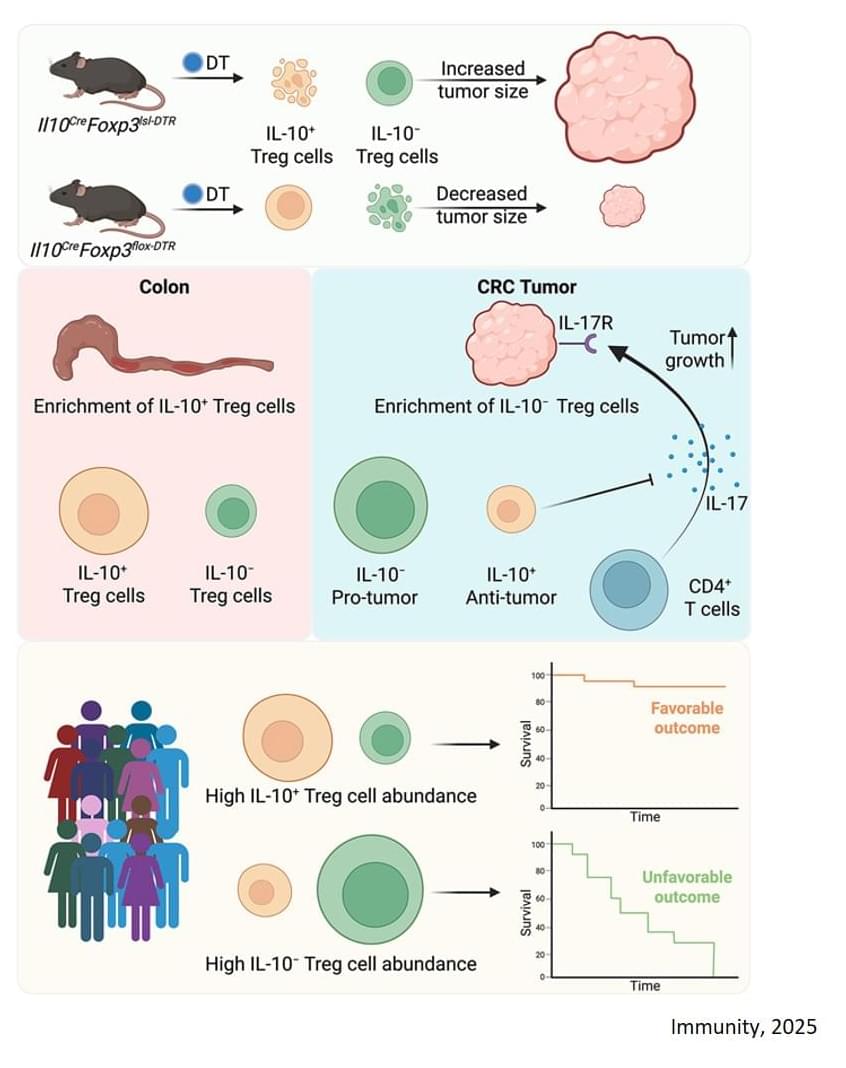
For this study, the researchers focused on a type of colorectal cancer that accounts for 80% to 85% of all colorectal cancers — microsatellite stable (MSS) with proficient mismatch repair (MMRp), meaning the tumors’ DNA is relatively stable. These cancers are largely resistant to checkpoint inhibitor immunotherapies.
Previous groundbreaking research found checkpoint inhibitors alone could successfully treat rectal cancer and several other cancers with the opposite tumor type — those with high microsatellite instability (MSI-H) and mismatch repair deficiency (MMRd). This allows doctors to spare many patients from surgery, chemotherapy, and radiation.
Here the team employed an mouse model that accurately recreates the common mutations, behaviors, and immune cell composition of human colorectal cancer. They found that the regulatory T cells associated with the cancer are split between two types: Cells that make a signaling molecule (cytokine) called interleukin‑10 (IL-10) and cells that don’t.
Through a series of sophisticated experiments that selectively eliminated each type of cell, the researchers discovered:
When IL-10-positive cells were removed, tumor growth accelerated.
In most solid tumors, high numbers of regulatory T (Treg) cells are associated with poorer outcomes because they dampen the immune system’s ability to fight against a tumor.
Colorectal cancer, however, is a puzzling exception. A high density of Treg cells in colorectal tumors is actually associated better survival — though scientists haven’t been sure why.
Now a new study by researchers offers an answer to this mystery — one that could help improve immunotherapy treatment for the majority of patients with colorectal cancer, and potentially for other cancers that affect tissues such as the skin and the lining of the stomach, mouth, and throat.