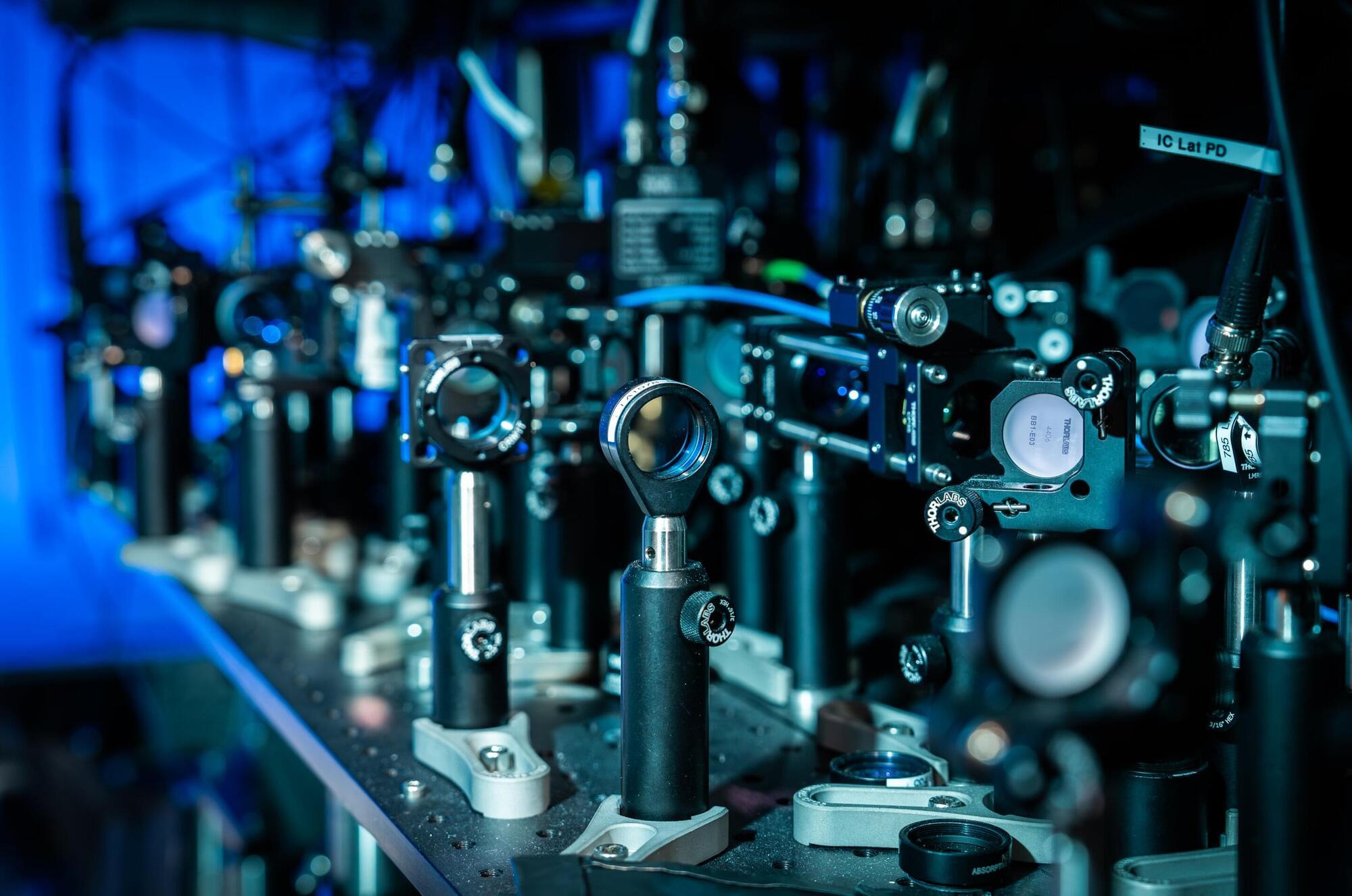
A light has emerged at the end of the tunnel in the long pursuit of developing quantum computers, which are expected to radically reduce the time needed to perform some complex calculations from thousands of years down to a matter of hours.
A team led by Stanford physicists has developed a new type of “optical cavity” that can efficiently collect single photons, the fundamental particle of light, from single atoms. These atoms act as the building blocks of a quantum computer by storing “qubits”—the quantum version of a normal computer’s bits of zeros and ones. This work enables that process for all qubits simultaneously, for the first time.
In a study published in Nature, the researchers describe an array of 40 cavities containing 40 individual atom qubits as well as a prototype with more than 500 cavities. The findings indicate a way to ultimately create a million-qubit quantum computer network.