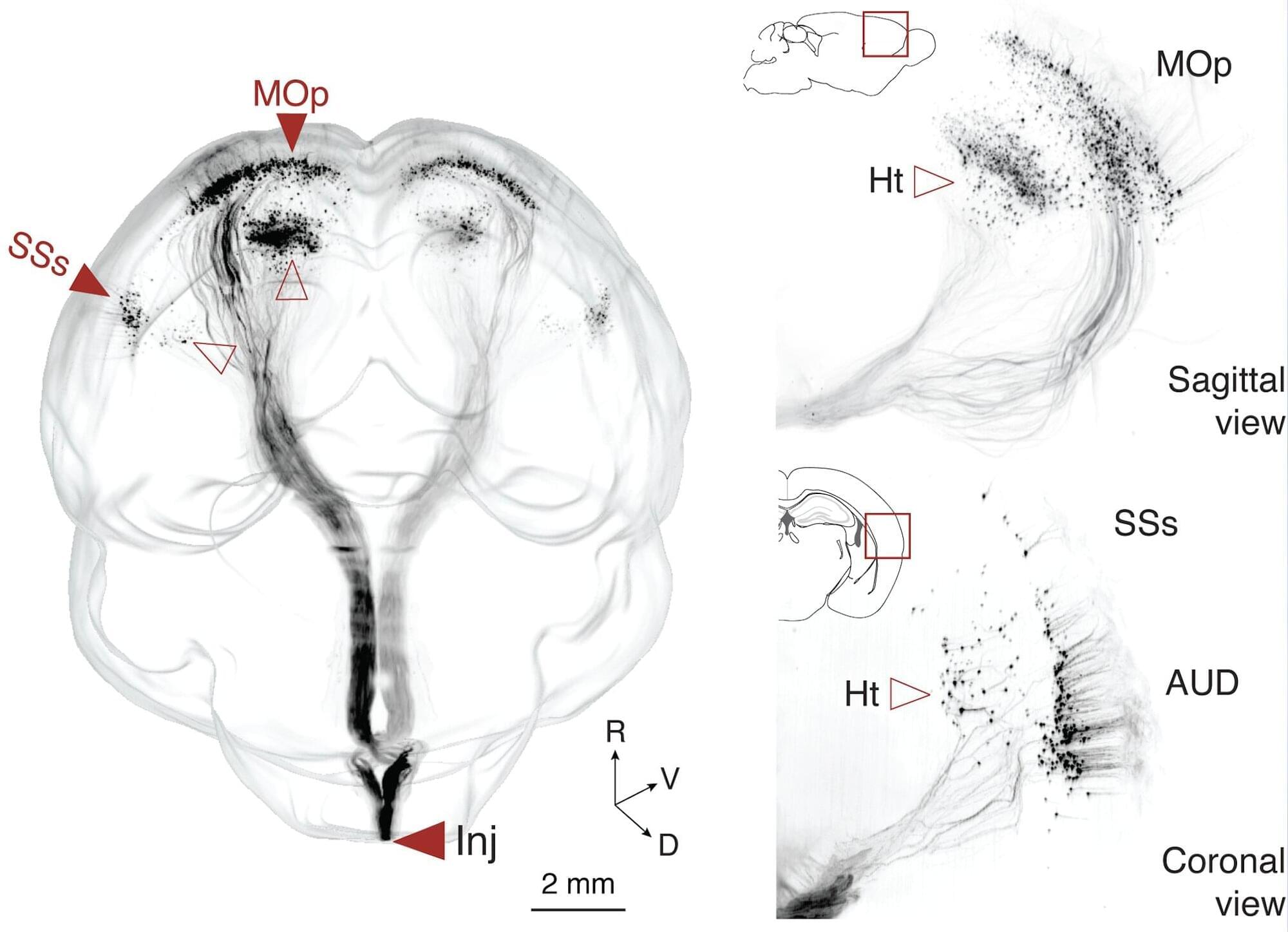
The human brain contains billions of connected neurons that collectively support different mental functions, including the processing of sensory information, the encoding of memories, attention processes, and decision-making. For a long time, neuroscientists have assumed the position of specific neurons in the brain plays a key role in the brain’s connectivity and proper functioning.
Researchers at University of Geneva, INSERM, Ecole Polytechnique Fédérale de Lausanne and other institutes recently gathered evidence that contradicts this long-standing assumption, showing misplaced neurons can still retain their “identity,” connect with other neurons and support the processing of sensory information.
Their paper, published in Nature Neuroscience, could reshape the present understanding of developmental disorders and other conditions linked to the rearrangement of neurons or cortical malformations.