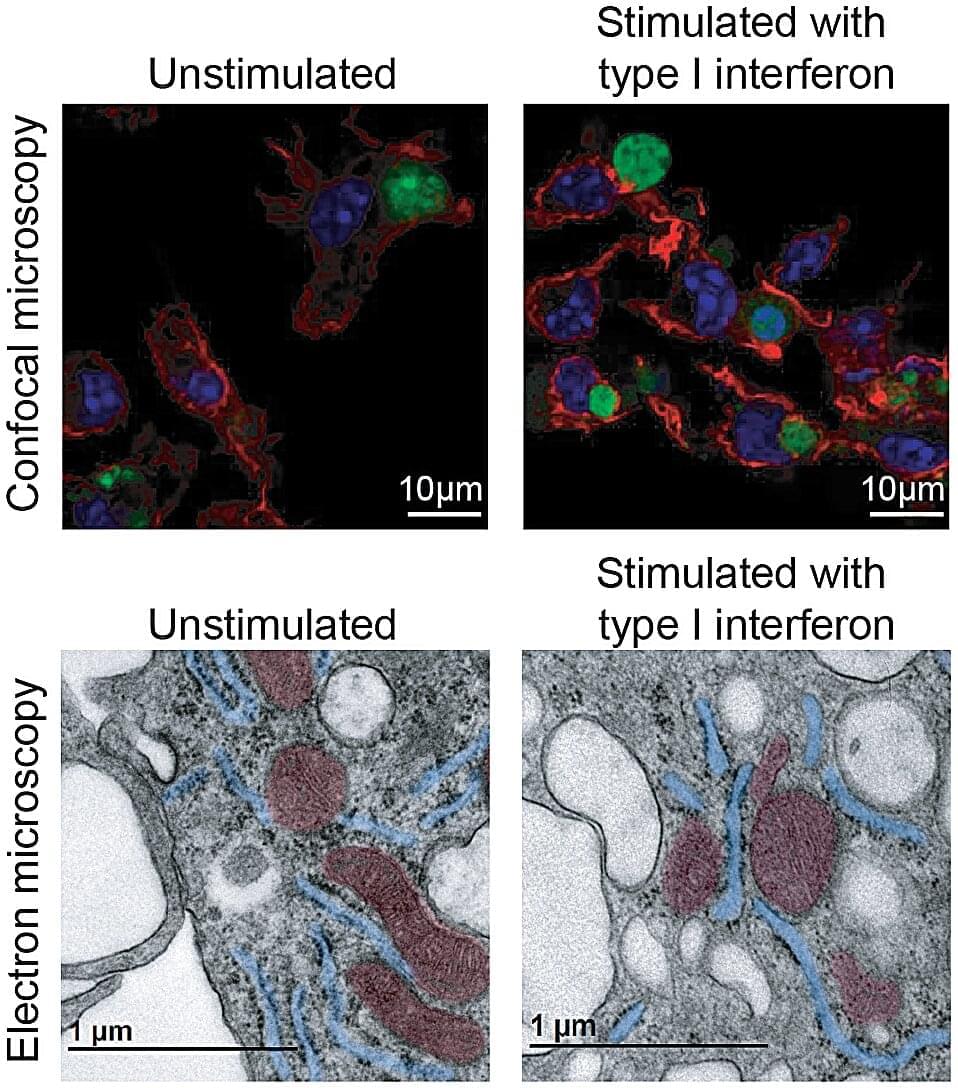
When our body fights an infection, the immune system must quickly activate defenses and trigger a beneficial inflammatory response. But it is just as important to resolve that inflammation and return to homeostasis. Macrophages play a key role in this balance: they are cells specialized in phagocytosing, or engulfing, cells that have died due to viral infection and in repairing infection—or inflammation—related tissue damage.
A study conducted at the Centro Nacional de Investigaciones Cardiovasculares Carlos III (CNIC) and published in Immunity reveals the mechanism by which a signal associated with antiviral and inflammatory responses— type I interferon (IFN-I)—tunes macrophage mitochondria to enhance the clearance of tissue damage and prevent uncontrolled inflammation.
IFN-I is a cytokine that can promote either inflammatory or anti-inflammatory responses, depending on the disease context. It activates a specific inflammatory program known as interferon-stimulated genes (ISGs).