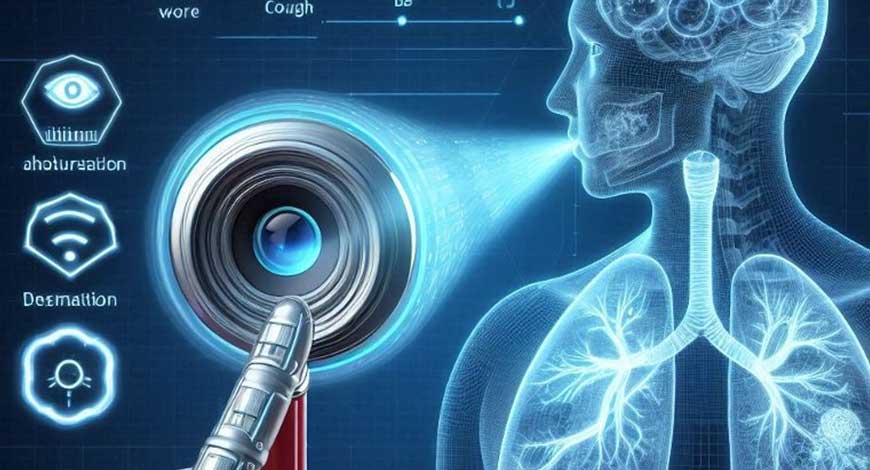
The platform can also hint at the type of respiratory issue involved, classifying cases as normal, obstructive, restrictive, or mixed. Obstructive patterns commonly appear in asthma and chronic obstructive pulmonary disease (COPD), while restrictive patterns are often linked to conditions such as pulmonary fibrosis.
The technology draws on the idea that cough sounds carry meaningful diagnostic clues. The researchers used a platform to classify the cases as ‘risk yes’ or ‘risk no’. When compared with physicians’ assessments, the model achieved a sensitivity of 97.27%. There was also strong agreement between the patterns identified by pulmonologists and the findings generated by the new tool.
Advances in AI have renewed interest in cough sound analysis as an accessible pre-screening method. Machine-learning models trained on large datasets can detect patterns associated with tuberculosis, Covid-19, asthma, and COPD, and can be built into portable devices or mobile apps for use in community settings.