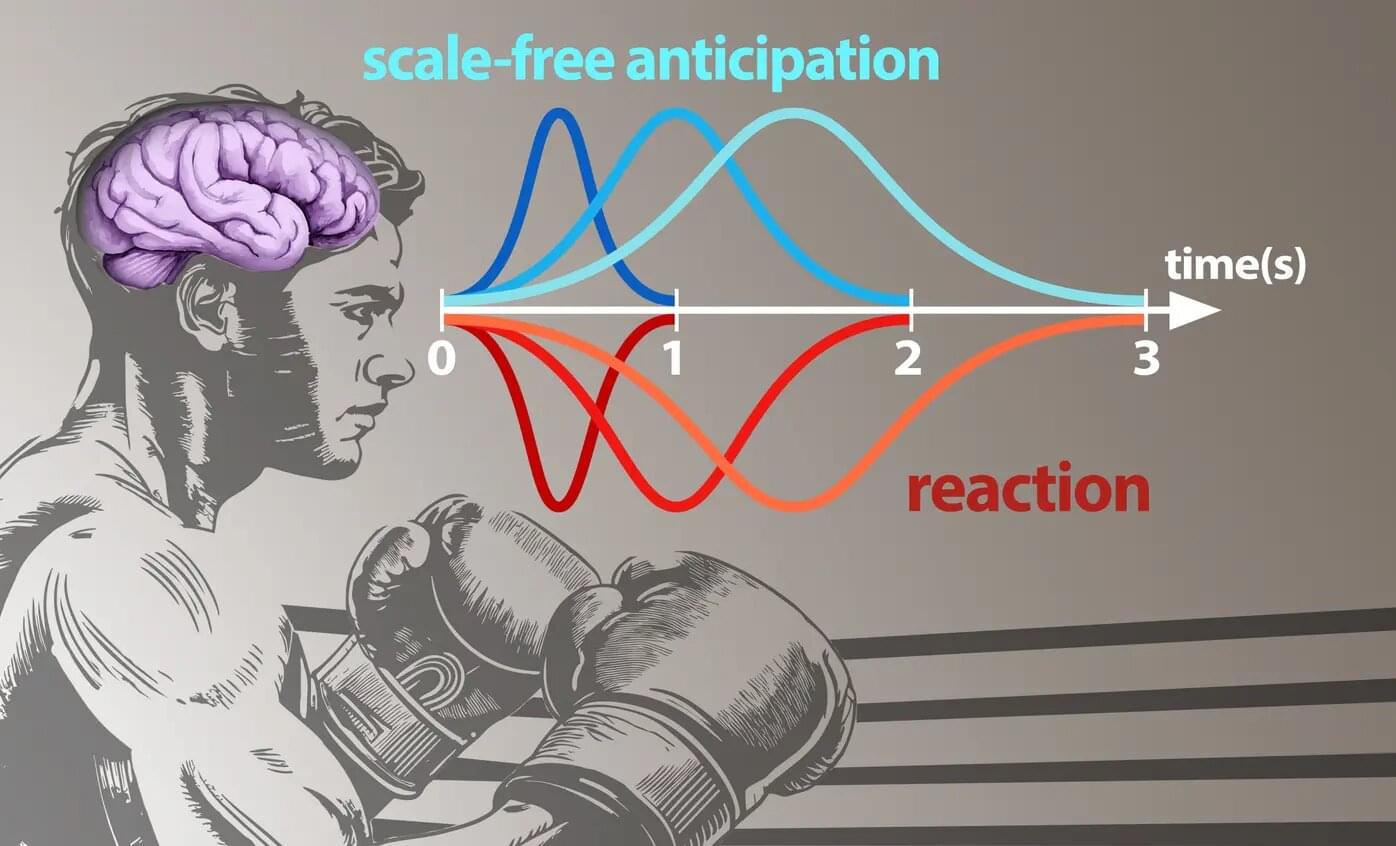
Humans respond to environments that change at many different speeds. A video game player, for example, reacts to on-screen events unfolding within hundreds of milliseconds or over several seconds. A boxer anticipates an opponent’s moves—even when their timing differs from that of previous opponents. In each case, the brain predicts when events occur, prepares for what comes next and flexibly adapts to the demands of the situation.
A study by neuroscientists from the Ernst Strüngmann Institute of the Max Planck Society, Goethe University Frankfurt, the Max Planck Institute for Empirical Aesthetics, and New York University, explains how the human brain predicts the timing of future events.
The research, published in the journal Proceedings of the National Academy of Sciences, shows that the brain continuously estimates how likely something is to happen within the next three seconds—and uses this estimate to prepare fast and accurate reactions.