In this report, researchers link thermogenic adipose tissue (brown/beige fat), best known for heat production, to blood-pressure control via direct fat–blood vessel communication. Using mouse models engineered to lose beige fat identity (via adipocyte-specific disruption of PRDM16), they observed elevated arterial pressure alongside perivascular remodeling, including fibrotic tissue accumulation and marked vascular hypersensitivity to the vasoconstrictor hormone angiotensin II. Mechanistically, loss of beige fat identity increased secretion of QSOX1 (quiescin sulfhydryl oxidase 1), which activated pro-fibrotic gene programs in vascular cells and promoted vessel stiffening; blocking this pathway (including genetic removal of QSOX1 in the model) restored healthier vascular signaling and function. The authors characterize this as a previously underappreciated, obesity-independent axis by which the “quality” (thermogenic vs white-like) of perivascular fat influences vascular stiffness and responsiveness to pressor signals, suggesting QSOX1 and related adipose-derived signals as potential precision targets for future antihypertensive therapies.
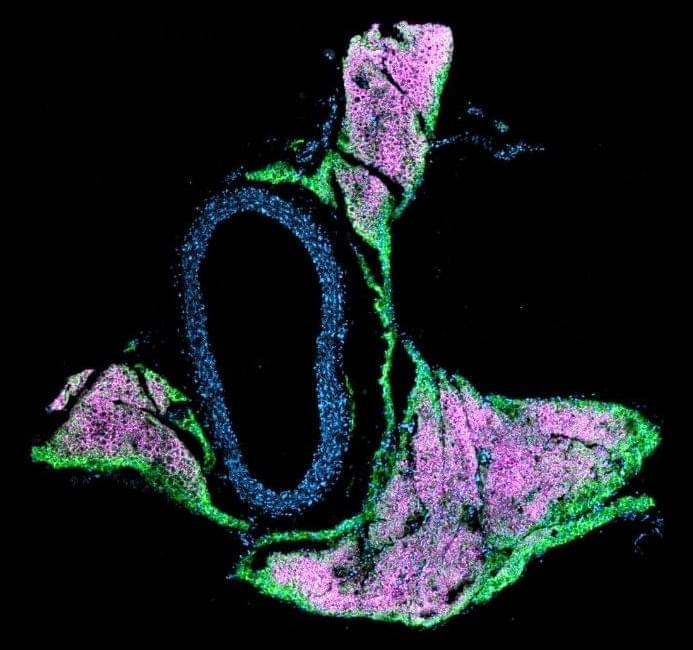
A mouse aorta with immunofluorescent tagging, emphasizing the close connection between vasculature and fat. (Credit: Cohen lab)
Obesity causes hypertension. Hypertension causes cardiovascular disease. And cardiovascular disease is the leading cause of death worldwide. While the link between fat and high blood pressure is clearly central to this deadly chain, its biological basis long remained unclear. What is it about fat that impacts vascular function and blood pressure control?
Now, a new study demonstrates how thermogenic beige fat—a type of adipose tissue, distinct from white fat, that helps the body burn energy—directly shapes blood pressure control. Building on clinical evidence that people with brown fat have lower odds of hypertension, the researchers created mouse models that cannot form beige fat (the thermogenic fat depot in mice that most closely resembles adult human brown fat) to watch what happens when this tissue is lost. They found that the loss of beige fat increases the sensitivity of blood vessels to one of the most important vasoconstricting hormones (angiotensin II)—and that blocking an enzyme involved in stiffening vessels and disrupting normal signaling can restore healthy vascular function in mice. These results, published in Science (opens in new window), reveal a previously unknown mechanism driving high blood pressure and point toward more precise therapies that target communication between fat and blood vessels.