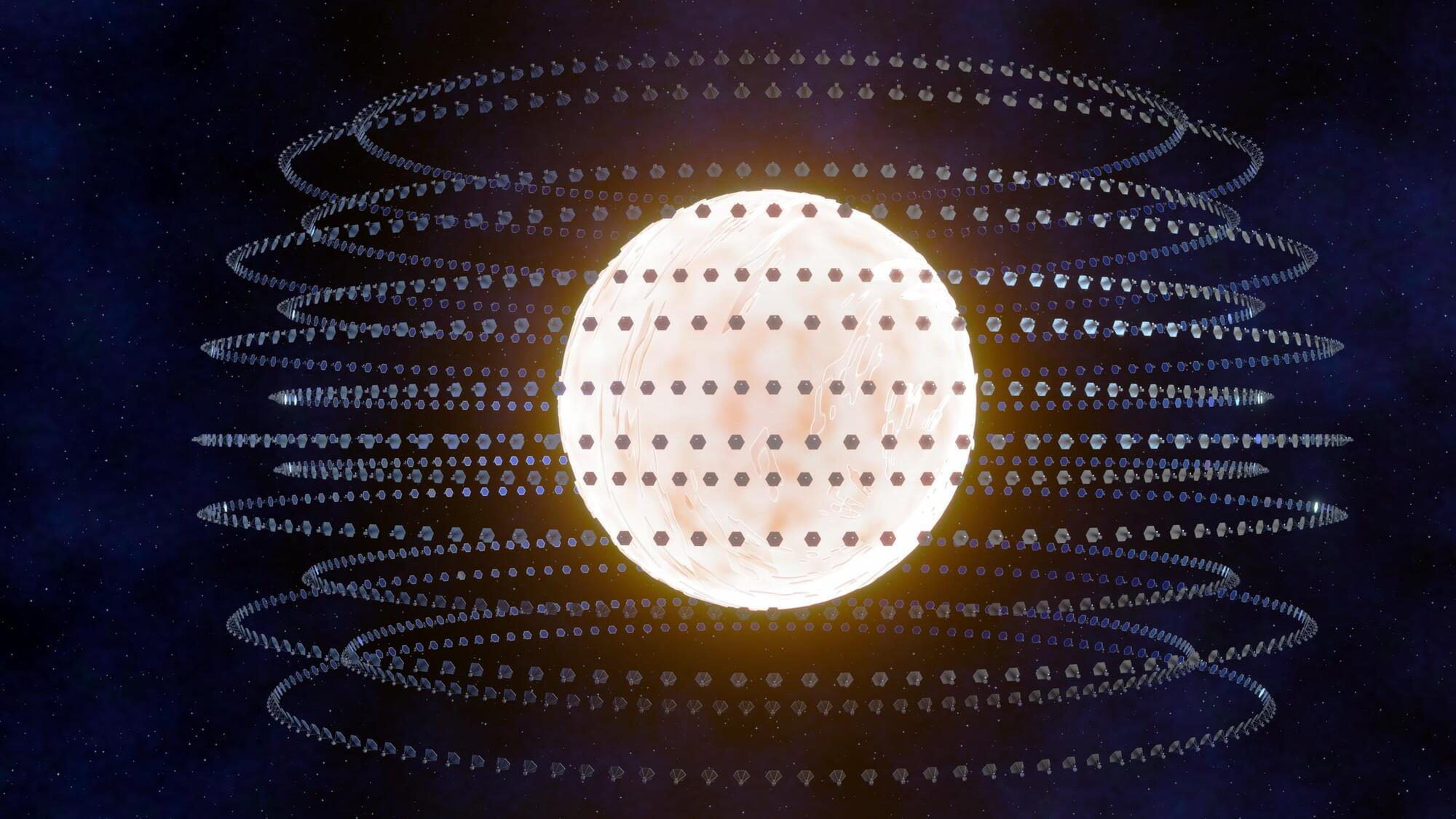
New theoretical models have strengthened the case that immense, energy-harvesting structures orbiting their host stars could exist in principle in distant stellar systems. With the right engineering precautions, calculations published in Monthly Notices of the Royal Astronomical Society, carried out by Colin McInnes at the University of Glasgow, show that both stellar engines and Dyson bubbles can become gravitationally stable, allowing them to tap into the vast amounts of energy emitted by their host stars.
For decades, astronomers have pondered the possibility of alien civilizations far more technologically advanced than our own. While these studies remain entirely speculative, many have converged on similar ideas for harvesting stellar energy: envisioning vast structures deployed around host stars.
If such structures could exist, they would provide civilizations with vastly more energy than any planet could offer—enough for ventures ranging from the terraforming of new worlds, to interstellar journeys spanning many generations.