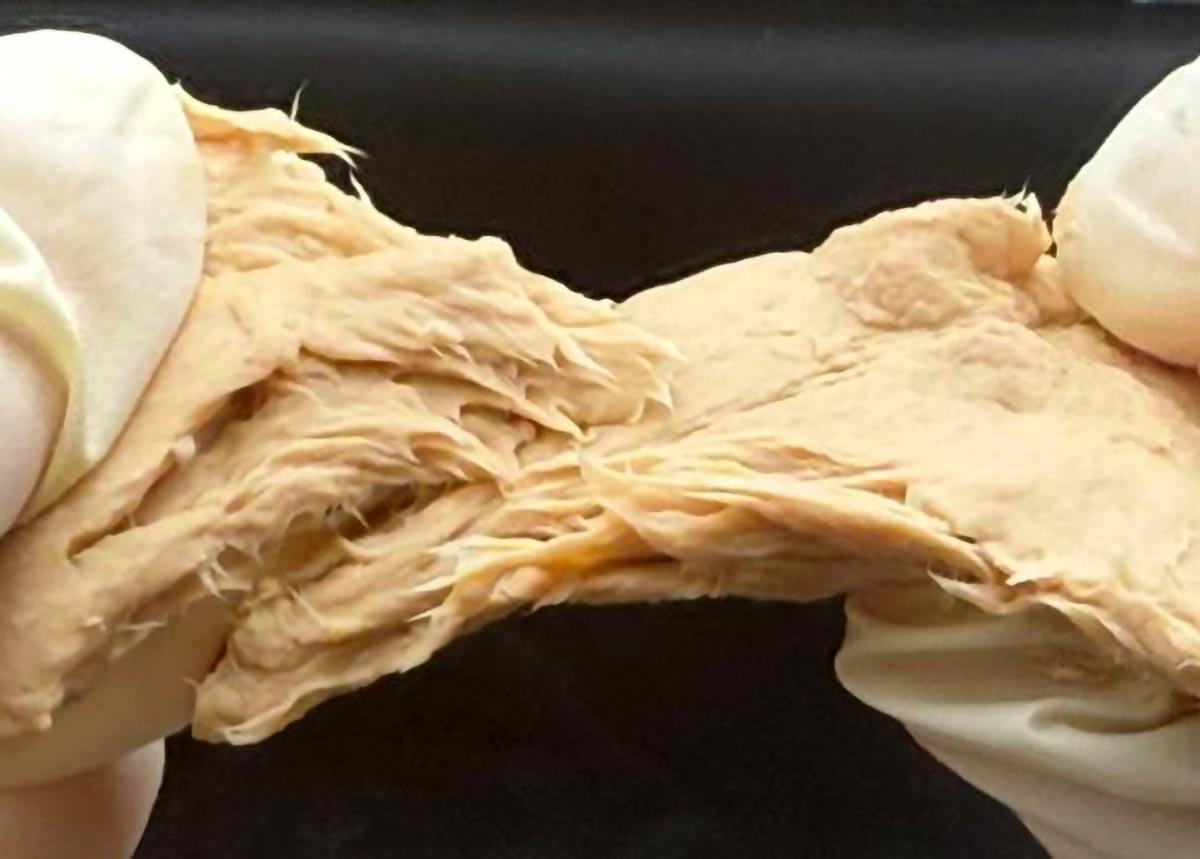
The modified strain grows faster, uses far fewer resources, and lowers greenhouse gas emissions by up to 60%. It also dramatically outperforms chicken farming in land and water use. The findings highlight a promising path for eco-friendly protein…
…’There is a popular demand for better and more sustainable protein for food,’ says corresponding author Xiao Liu of Jiangnan University in Wuxi, China. ‘We successfully made a fungus not only more nutritious but also more environmentally friendly by tweaking its genes.’
Animal agriculture contributes roughly 14% of global greenhouse gas emissions. It also requires large areas of land and significant amounts of fresh water, which are already under pressure from climate change and human activity. Because of these drawbacks, microbial proteins found in organisms such as yeast and fungi are gaining attention as a more sustainable alternative to traditional meat.
CRISPR has turned a simple fungus into a fast-growing, meat-like protein source with impressively low environmental impact.