JNeurosci: Lorincz et al. provide novel insights into the molecular mechanisms underlying excitatory synaptic dysfunction in schizophrenia.
▶️
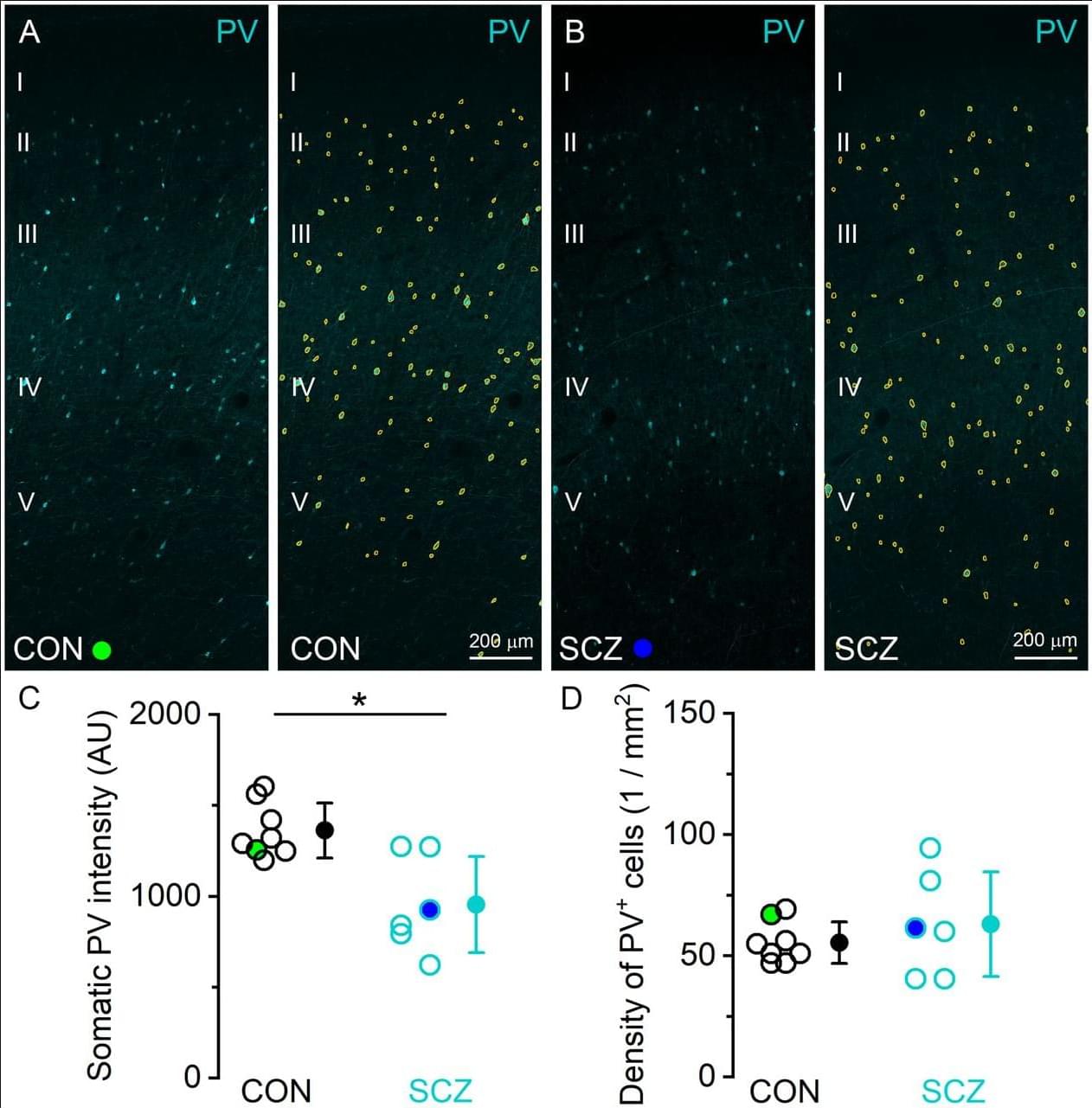
Abnormal excitatory synaptic transmission in the human prefrontal cortex has been implicated in the pathophysiology of schizophrenia based primarily on genetic evidence. However, changes in synaptic function cannot be predicted from altered gene expressions, but determining the amount, density, and subsynaptic distribution of synaptic proteins is the only reliable indirect readout of function. Detecting proteins in individual synapses of human postmortem tissues has been severely constrained by technical limitations. Here we overcome this limitation by optimizing a high-resolution, quantitative localization method to facilitate antigen recognition at excitatory synapses in postmortem brains of both sexes.