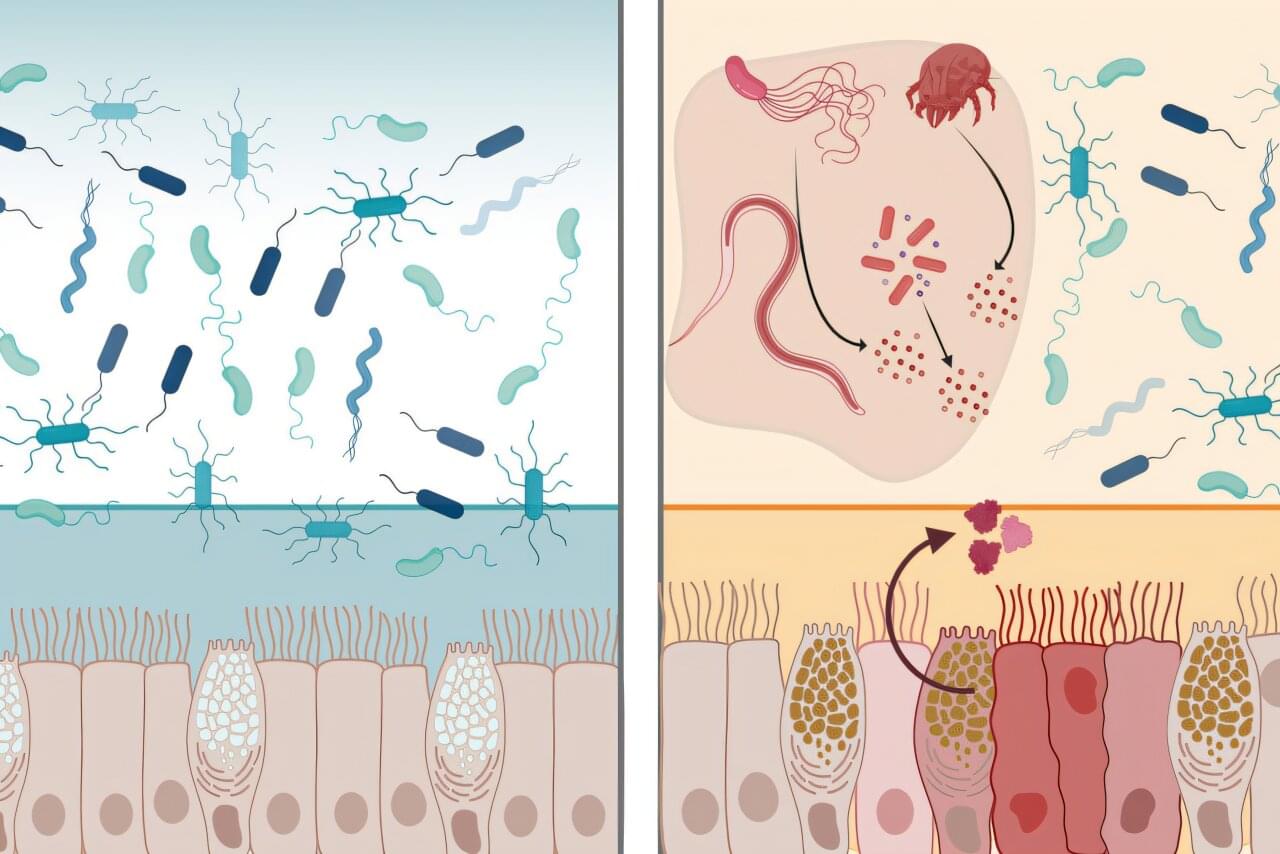
The mucosal surfaces that line the body are embedded with defensive molecules that help keep microbes from causing inflammation and infections. Among these molecules are lectins—proteins that recognize microbes and other cells by binding to sugars found on cell surfaces.
One of these lectins, MIT researchers have found, has broad-spectrum antimicrobial activity against bacteria found in the GI tract. This lectin, known as intelectin-2, binds to sugar molecules found on bacterial membranes, trapping the bacteria and hindering their growth. Additionally, it can crosslink molecules that make up mucus, helping to strengthen the mucus barrier.
“What’s remarkable is that intelectin-2 operates in two complementary ways. It helps stabilize the mucus layer, and if that barrier is compromised, it can directly neutralize or restrain bacteria that begin to escape,” says Laura Kiessling, the Novartis Professor of Chemistry at MIT and the senior author of the study.