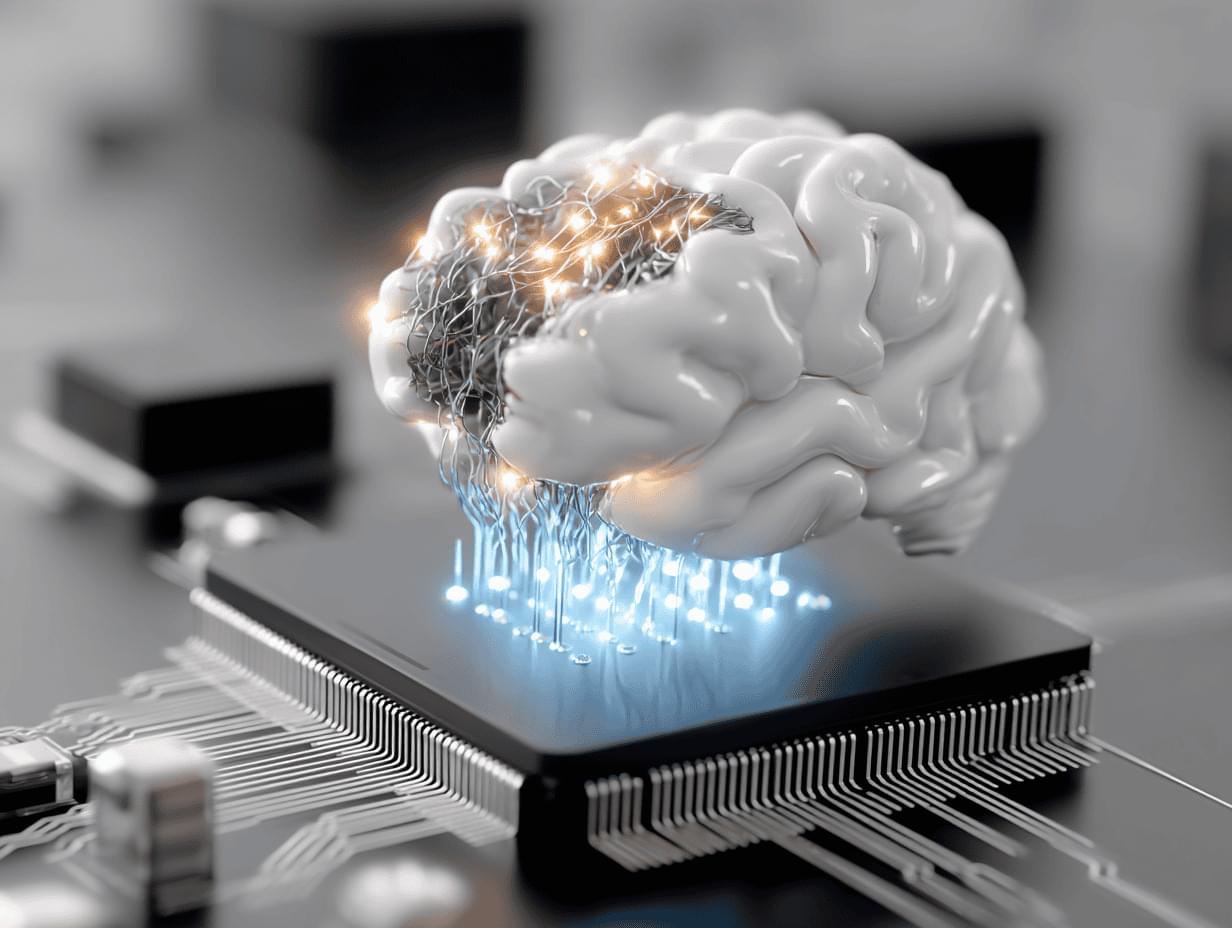
At first glance, the idea sounds implausible: a computer made not of silicon, but of living brain cells. It’s the kind of concept that seems better suited to science fiction than to a laboratory bench. And yet, in a few research labs around the world, scientists are already experimenting with computers that incorporate living human neurons. Such computers are now being trained to perform complex tasks such as play games and even drive robots.
These systems are built from brain organoids: tiny, lab-grown clusters of human neurons derived from stem cells. Though often nicknamed “mini-brains,” they are not thinking minds or conscious entities. Instead, they are simplified neural networks that can be interfaced with electronics, allowing researchers to study how living neurons process information when placed in a computational loop.
In fact, some researchers even claim that these tools are pushing the frontiers of medicine, along with those of computing. Dr. Ramon Velaquez, a neuroscientist from Arizona State University, is one such researcher.