New brain research reveals why we’re willing to go out of our way to punish people who break the rules, even when it costs us time, money, or friends. This behavior, which researchers call “altruistic punishment,” has been essential for human cooperation since ancient times. It’s the invisible glue that keeps societies fair: we enforce the rules not just for ourselves, but for everyone.
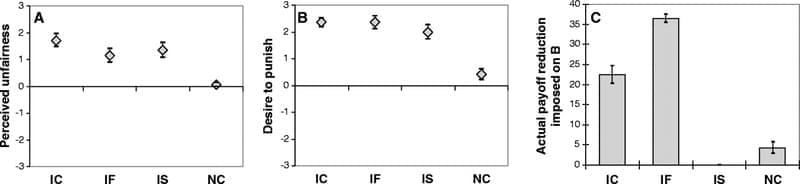
Many people voluntarily incur costs to punish violations of social norms. Evolutionary models and empirical evidence indicate that such altruistic punishment has been a decisive force in the evolution of human cooperation. We used H2 15 O positron emission tomography to examine the neural basis for altruistic punishment of defectors in an economic exchange. Subjects could punish defection either symbolically or effectively. Symbolic punishment did not reduce the defector’s economic payoff, whereas effective punishment did reduce the payoff. We scanned the subjects’ brains while they learned about the defector’s abuse of trust and determined the punishment. Effective punishment, as compared with symbolic punishment, activated the dorsal striatum, which has been implicated in the processing of rewards that accrue as a result of goal-directed actions.