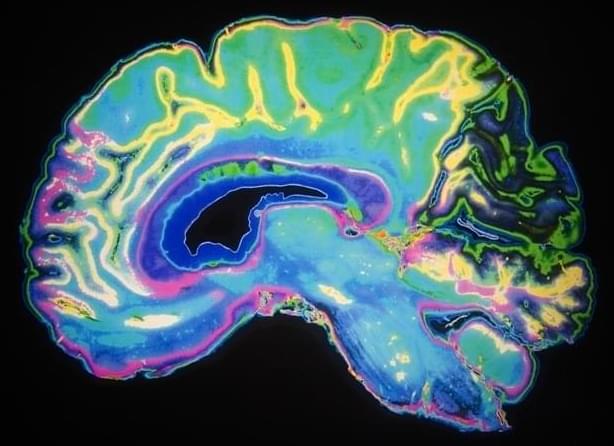
Our thoughts are specified by our knowledge and plans, yet our cognition can also be fast and flexible in handling new information. How does the well-controlled and yet highly nimble nature of cognition emerge from the brain’s anatomy of billions of neurons and circuits? A new study by researchers in The Picower Institute for Learning and Memory at MIT provides new evidence from tests in animals that the answer might be a theory called “Spatial Computing.”
First proposed in 2023 by Picower Professor Earl K. Miller and colleagues Mikael Lundqvist and Pawel Herman, Spatial Computing theory explains how neurons in the prefrontal cortex can be organized on the fly into a functional group capable of carrying out the information processing required by a cognitive task. Moreover, it allows for neurons to participate in multiple such groups, as years of experiments have shown that many prefrontal neurons can indeed participate in multiple tasks at once. The basic idea of the theory is that the brain recruits and organizes ad hoc “task forces” of neurons by using “alpha” and “beta” frequency brain waves (about 10–30 Hz) to apply control signals to physical patches of the prefrontal cortex. Rather than having to rewire themselves into new physical circuits every time a new task must be done, the neurons in the patch instead process information by following the patterns of excitation and inhibition imposed by the waves.
Think of the alpha and beta frequency waves as stencils that shape when and where in the prefrontal cortex groups of neurons can take in or express information from the senses, Miller said. In that way, the waves represent the rules of the task and can organize how the neurons electrically “spike” to process the information content needed for the task.