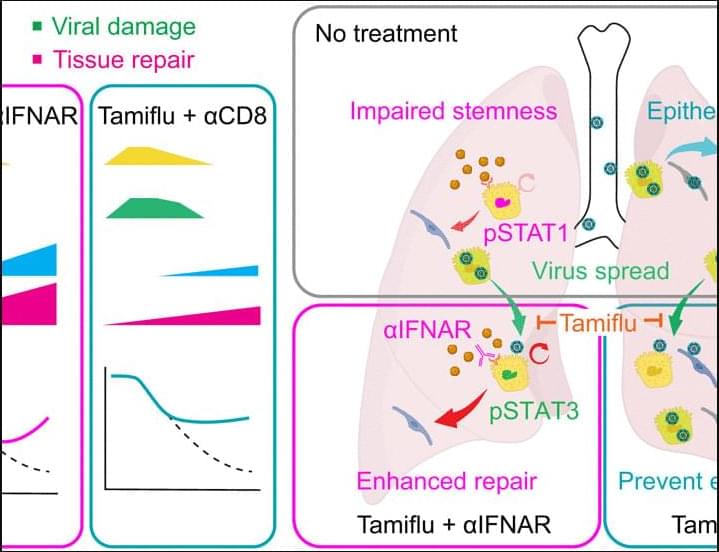
Recovery from deadly influenza infection may hinge on helping the lungs heal in addition to stopping the virus, according to a new Science study in mice.
The results show that pairing modest antiviral therapies with immune modulation can restore damaged tissues and lung function, even after severe infection has taken hold.
Maintaining tissue function while eliminating infected cells is fundamental, and inflammatory damage plays a major contribution to lethality after lung infection. We tested 50 immunomodulatory regimes to determine their ability to protect mice from lethal infection. Only neutrophil depletion soon after infection prevented death from influenza. This result suggests that the infected host passed an early tipping point after which limiting innate damage alone could not rescue lung function. We investigated treatments that could have efficacy when administered later in infection. We found that partial limitation of viral spread together with enhancement of epithelial repair, by interferon blockade or limiting CD8+ T cell–mediated killing of epithelial cells, reduced lethality.