Every living being must cope with a changing world—summer gives way to winter, one year it floods and the next is a drought. It’s obvious that populations of plants and animals must constantly face new challenges, says University of Vermont scientist Csenge Petak. But what’s not obvious is how these changes in the environment affect evolution.
“Do populations benefit from lots of environmental fluctuations, making new generations more prepared to face future changes,” she wondered, “or are they impaired, forced to readapt again and again, never reaching the heights of fitness that the same populations in a stable environment could achieve?”
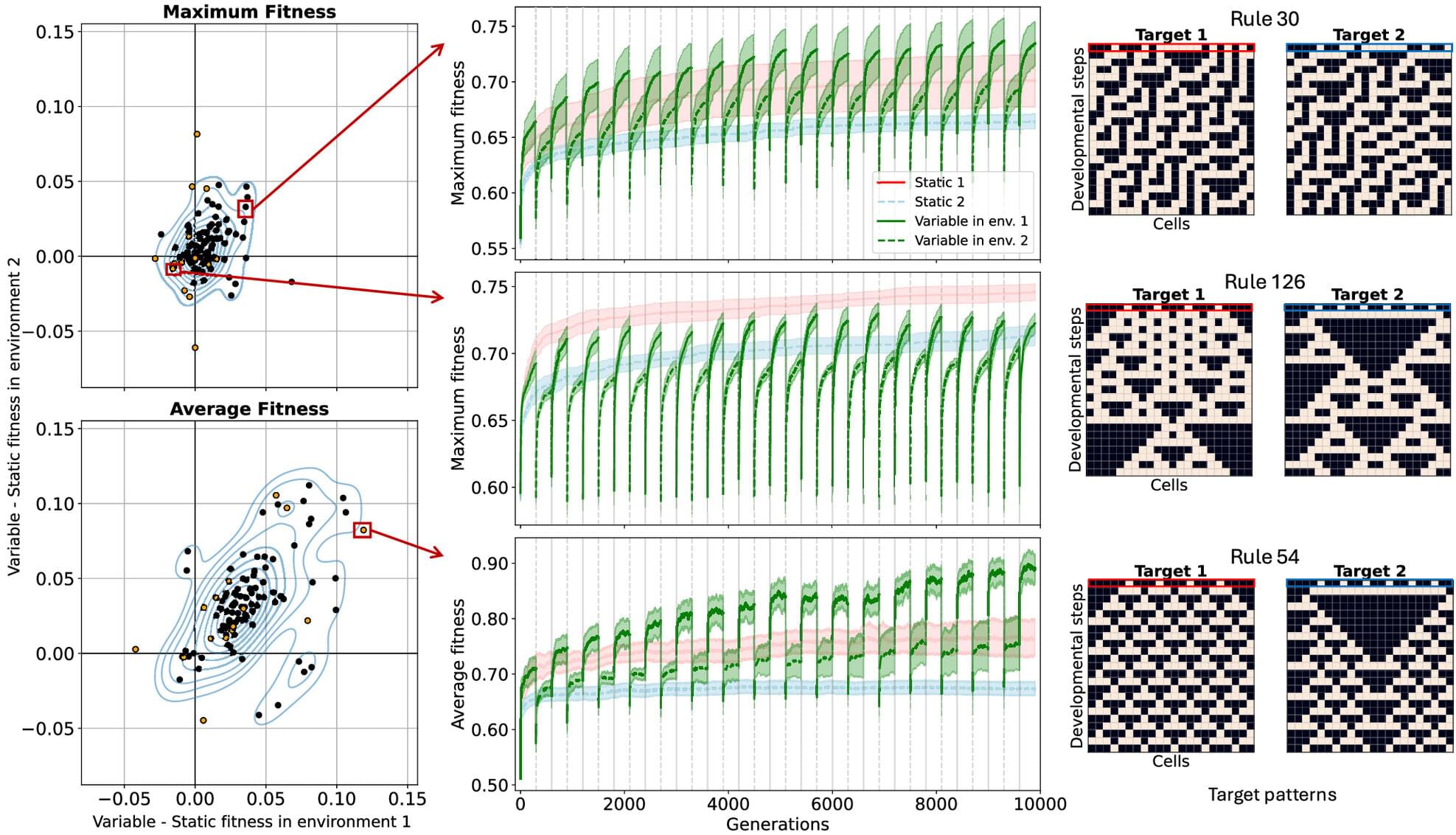
To explore this question, she and University of Vermont computer scientist Lapo Frati—as well as two other UVM researchers and one at the University of Cambridge—developed a first-of-its-kind study using a powerful computer model that tracks thousands of generations of digital organisms.