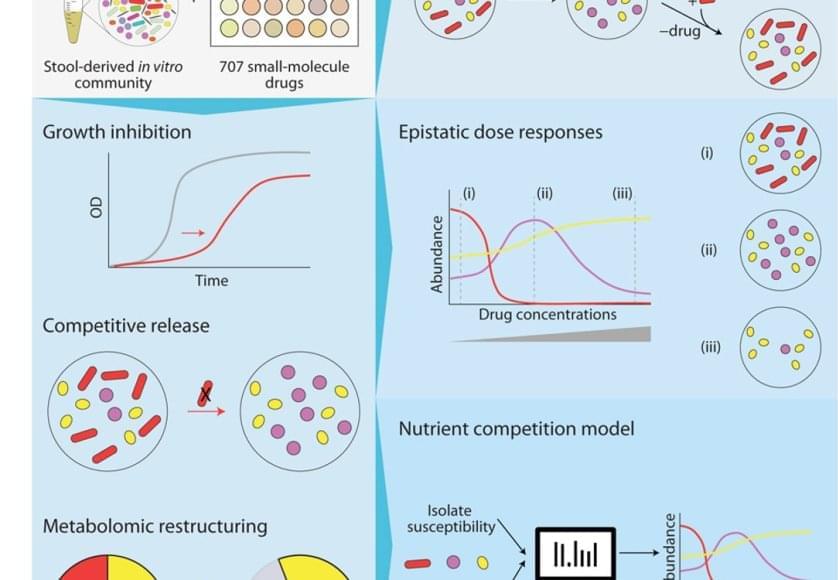
The bacteria in our poop are a reasonable representation of what’s living in our digestive system. To understand how different drugs can impact the gut microbiome, the team cultured microbial communities from nine donor fecal samples and systematically tested them with 707 different clinically relevant drugs.
The researchers examined changes in the growth of different bacterial species, the community composition, and the metabolome – the mix of small molecules called metabolites that microbes produce and consume. They found that 141 drugs altered the microbiome of the samples and even short-term treatments created enduring changes, entirely wiping out some microbial species. The primary force behind how the community responds to drug inhibition was competition over nutrients.
“The winners and losers among our gut bacteria can often be predicted by understanding how sensitive they are to the medications and how they compete for food,” said the first author on the paper. “In other words, drugs don’t just kill bacteria; they also reshuffle the ‘buffet’ in our gut, and that reshuffling shapes which bacteria win.”
Despite the complexity of the bacterial communities, the researchers were able to create data-driven computer models that accurately predicted how they would respond to a particular drug. They factored in the sensitivity of different bacterial species to that drug and the competitive landscape – essentially, who was competing with whom for which nutrients.
Their work provides a framework for predicting how a person’s microbial community might change with a given drug, and could help scientists find ways to prevent these changes or more easily restore a healthy gut microbiome in the future.
Our gut microbiome is made up of trillions of bacteria and other microbes living in our intestines. These help our bodies break down food, assist our immune system, send chemical signals to our brain, and potentially serve many other functions that researchers are still working to understand. When the microbiome is out of balance – with not enough helpful bacteria or the wrong combination of microbes – it can affect our whole body.
Many researchers have become aware that antibiotics can disrupt the gut microbiome, but less well appreciated is that other medications can also reshape this microbial community. In a paper published in Cell, researchers have studied how many common medications impact the trillions of microbes in the gut, with potentially far-reaching consequences across metabolism, immune system response, and overall health. The study shows that many of the changes to the gut microbiome are driven by competition for nutrients – medications reduce certain bacterial populations and change the availability of nutrients, and the bacteria most able to capitalize on those changes are the ones to survive.
“This work reveals that drug-induced microbiome disruption follows predictable ecological rules, which opens the door to anticipating and even preventing side effects on gut health,” said the senior author on the paper. “It has implications for drug design, personalized medicine, and microbiome resilience.”