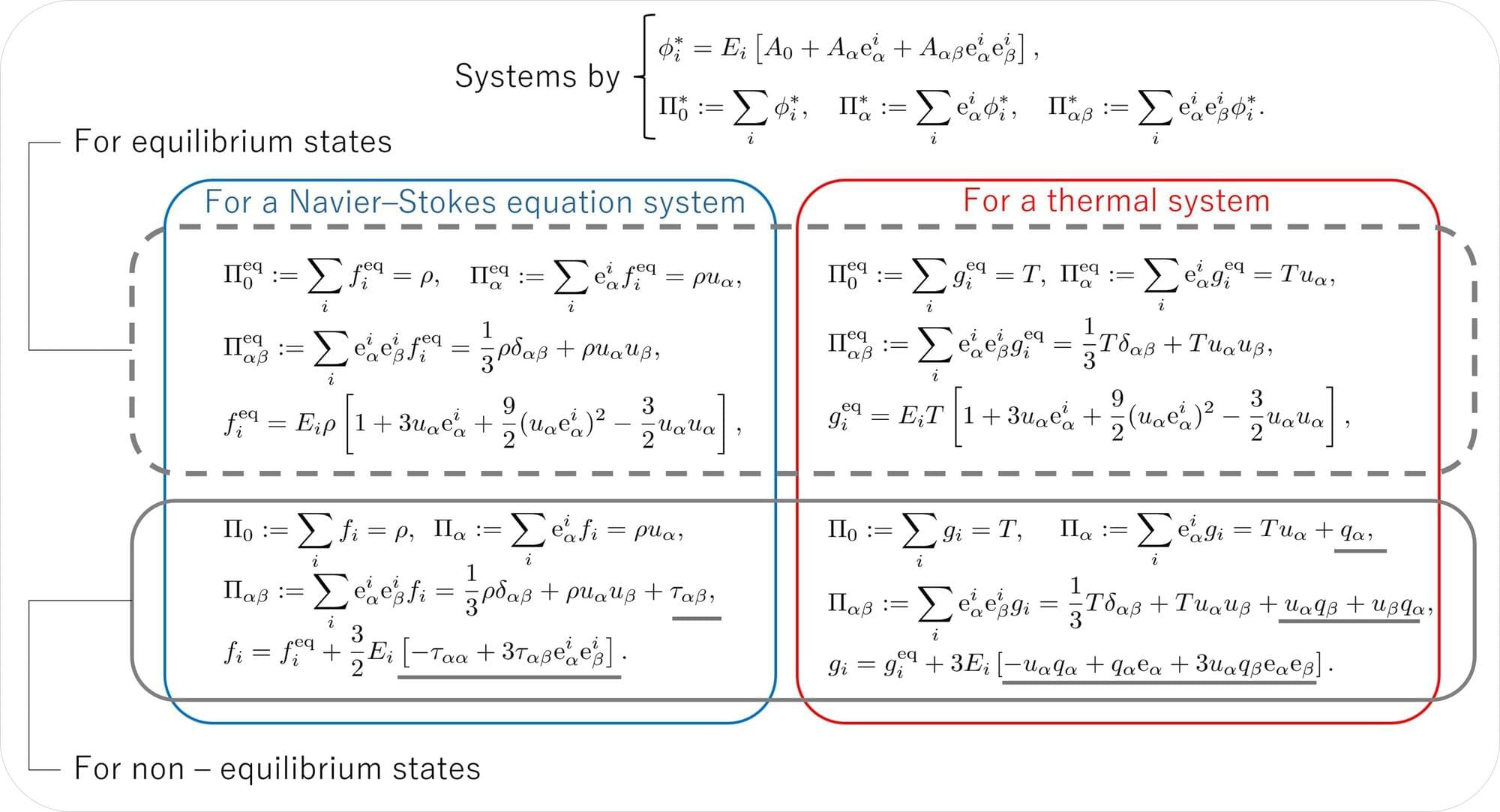
Scientists from Tokyo Metropolitan University have re-engineered the popular Lattice-Boltzmann Method (LBM) for simulating the flow of fluids and heat, making it lighter and more stable than the state-of-the-art.
By formulating the algorithm with a few extra inputs, they successfully got around the need to store certain data, some of which span the millions of points over which a simulation is run. Their findings might overcome a key bottleneck in LBM: memory usage.
The work is published in the journal Physics of Fluids.