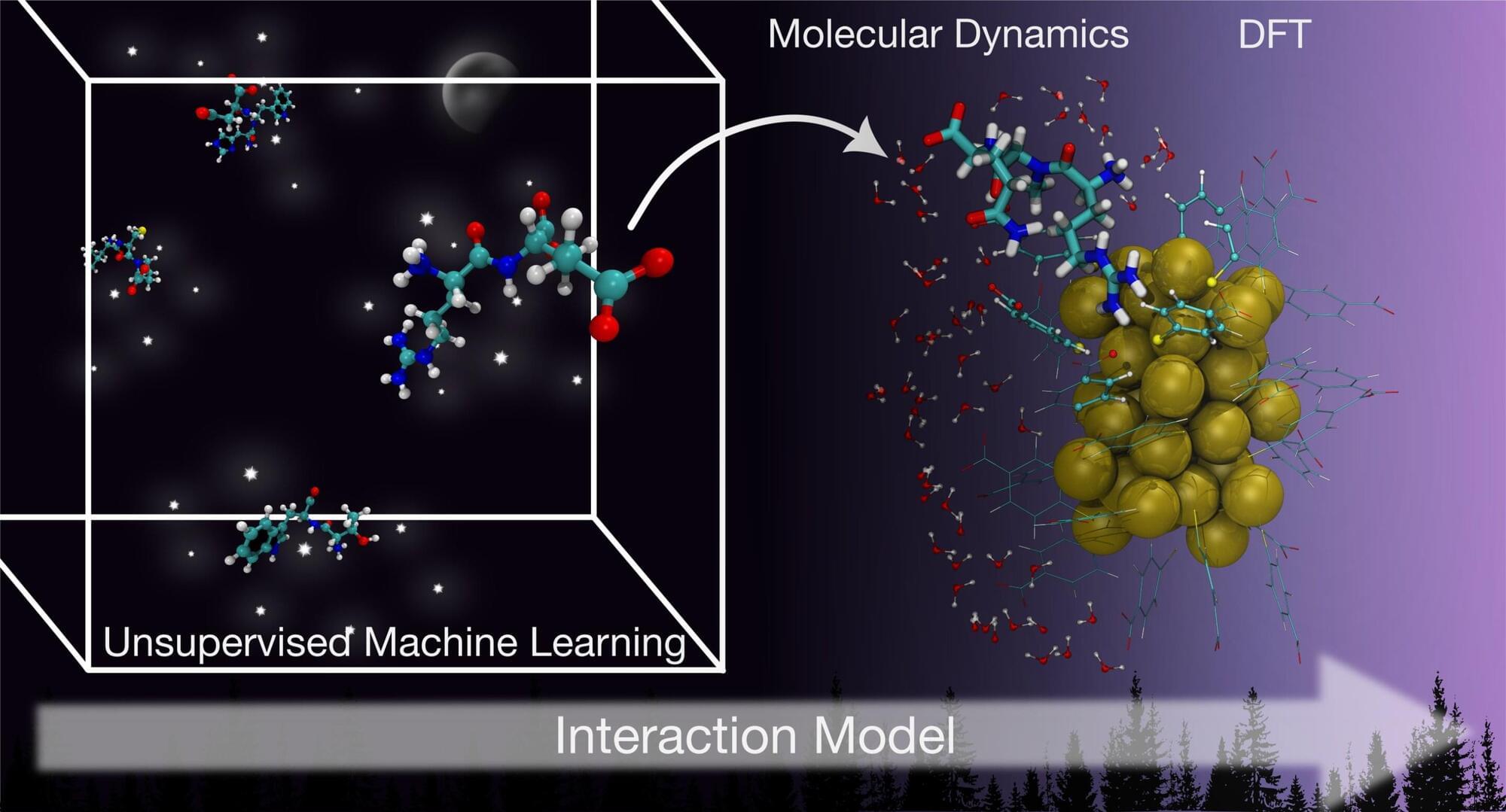
Researchers in the Nanoscience Center at the University of Jyväskylä, Finland, have developed a pioneering computational model that could expedite the use of nanomaterials in biomedical applications. The study presented the first generalizable machine-learning framework capable of predicting how proteins interact with ligand-stabilized gold nanoclusters, materials widely employed in bioimaging, biosensing, and targeted drug delivery.
The adsorption of proteins onto nanomaterial surfaces is fundamental to many biological applications, including bioimaging and biosensing to targeted drug delivery. Gold nanoclusters, in particular, have attracted attention thanks to their biocompatibility and tunable optical properties. Yet existing studies that predict how proteins interact with these ligand-protected nanostructures often focus on isolated cases, leaving researchers without a unified model to guide design.
“This gap has created a clear need for general, scalable models capable of capturing the underlying rules of protein–nanocluster binding,” specifies Postdoctoral Researcher Brenda Ferrari from the University of Jyväskylä