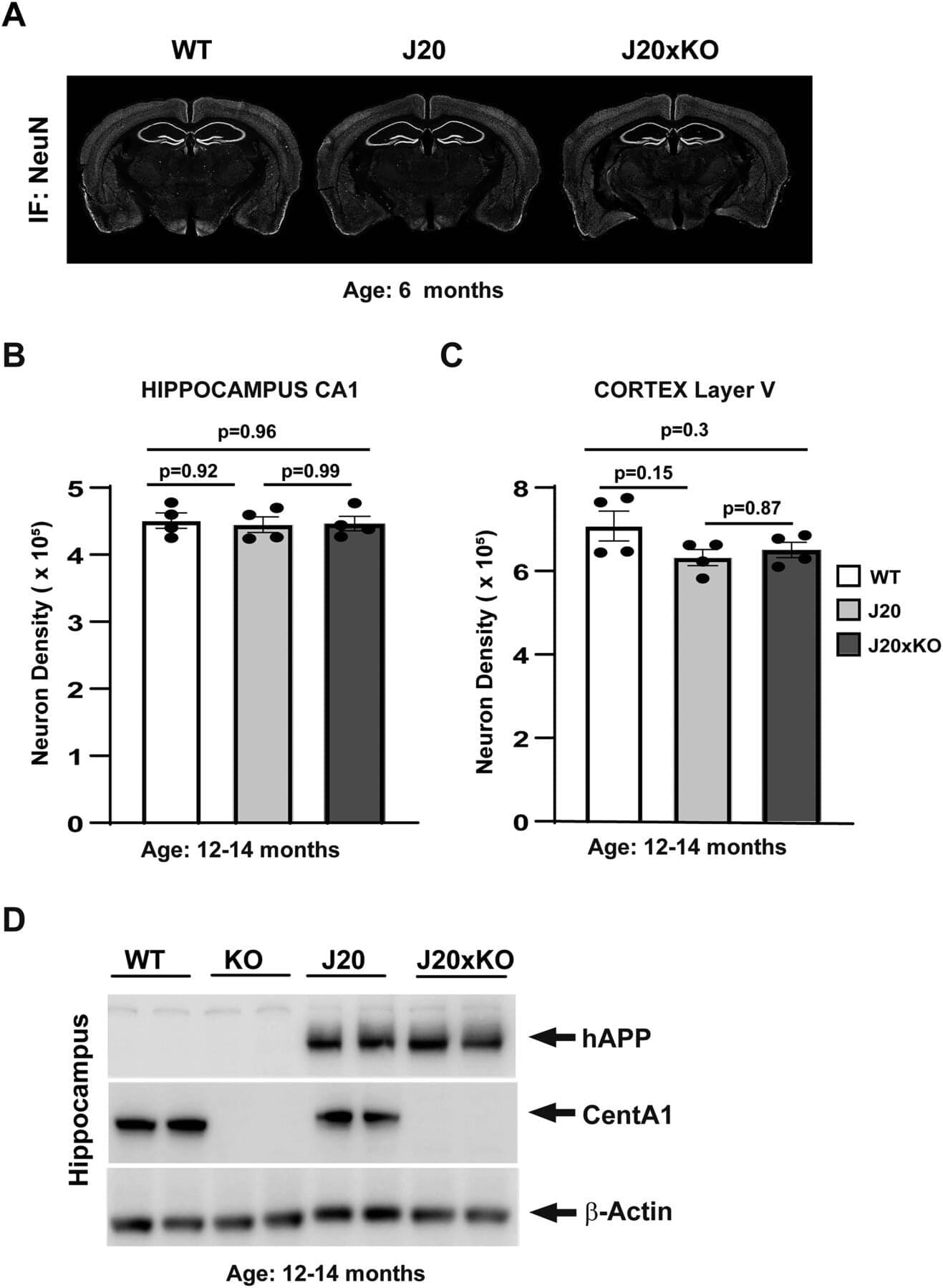
New research published in the journal eNeuro examined whether eliminating a protein that is elevated in the brains of those with Alzheimer’s could prevent or reduce damage and behavioral symptoms in a mouse model of Alzheimer’s disease.
“Previous work from our research team and others found evidence that a specific protein named Centaurin-α1 is involved in the progression of Alzheimer’s damage within neurons,” explained lead author of the study, Dr. Erzsebet Szatmari. “To confirm the role of this protein and see if it might be a good therapeutic target, we tested whether genetically removing it would prevent or slow disease progression in a mouse model of the disease.”
The scientists used a well-characterized model of Alzheimer’s disease in mice. The disease model (called J20) contains two genetic mutations associated with rare familial variants of Alzheimer’s disease. These animals develop changes in brain tissue and behavioral deficits characteristic of many symptoms seen in human Alzheimer’s disease, including neuroinflammation, accumulation of neuronal plaques, synapse loss, and impairments in spatial memory and learning.