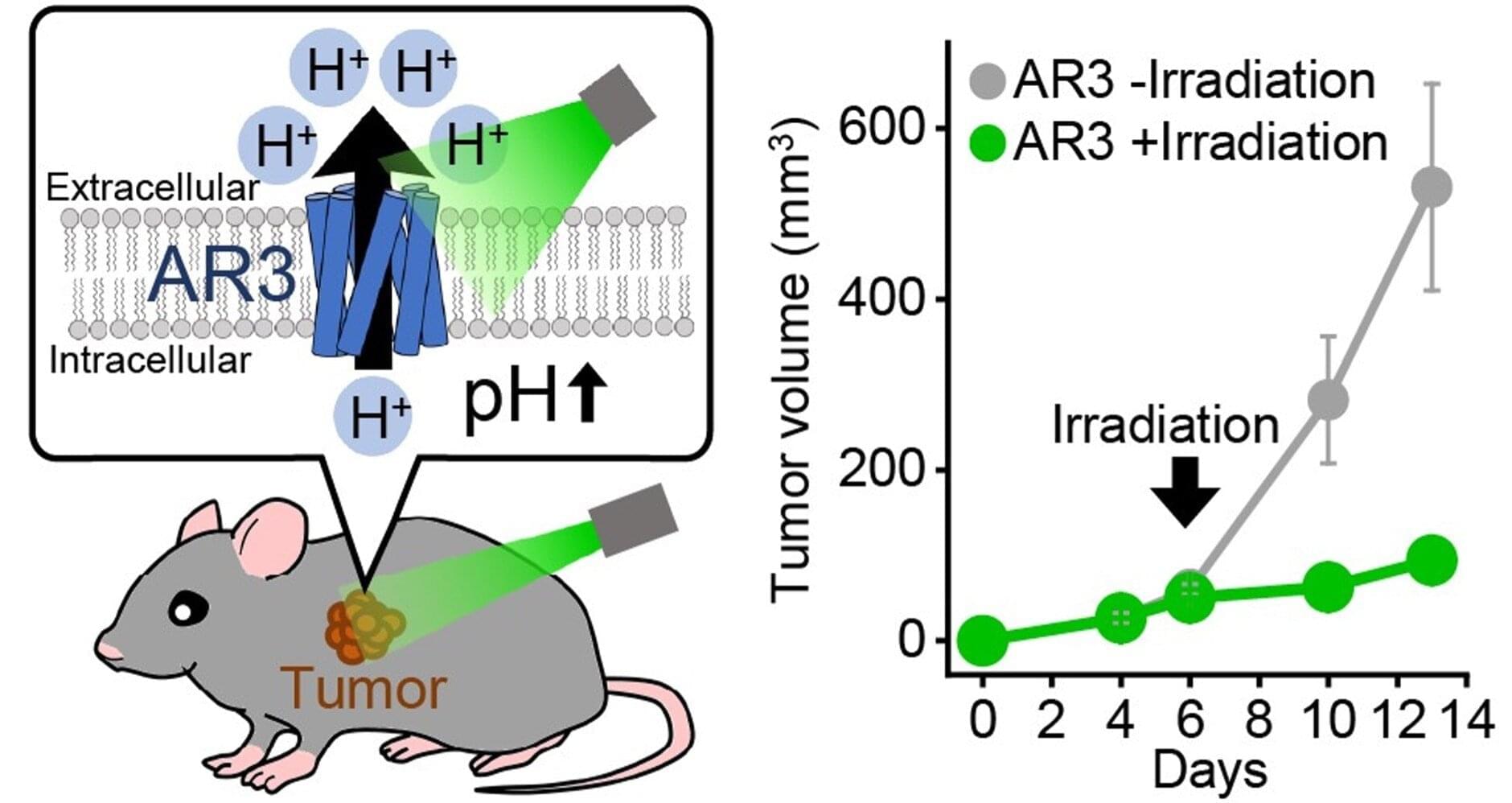
One of the hallmarks of cancer cells is their ability to evade apoptosis, or programmed cell death, through changes in protein expression. Inducing apoptosis in cancer cells has become a major focus of novel cancer therapies, as these approaches may be less toxic to healthy tissue than conventional chemotherapy or radiation. Many chemical agents are currently being tested for their ability to trigger apoptosis, and researchers are increasingly exploring light-activated molecules that can be precisely targeted to tumor sites using lasers, sparing surrounding healthy tissue.
Cancer cells have mitochondria that supply energy for rapid growth and division, but an overly alkaline environment is thought to disrupt mitochondrial function, leading to apoptosis.
A microbial protein called Archaerhodopsin-3 (AR3) may hold the key to alkalinity-induced apoptosis. When exposed to green light, AR3 pumps hydrogen ions out of the cell, increasing alkalinity, disrupting cellular functions, and eventually inducing apoptosis.