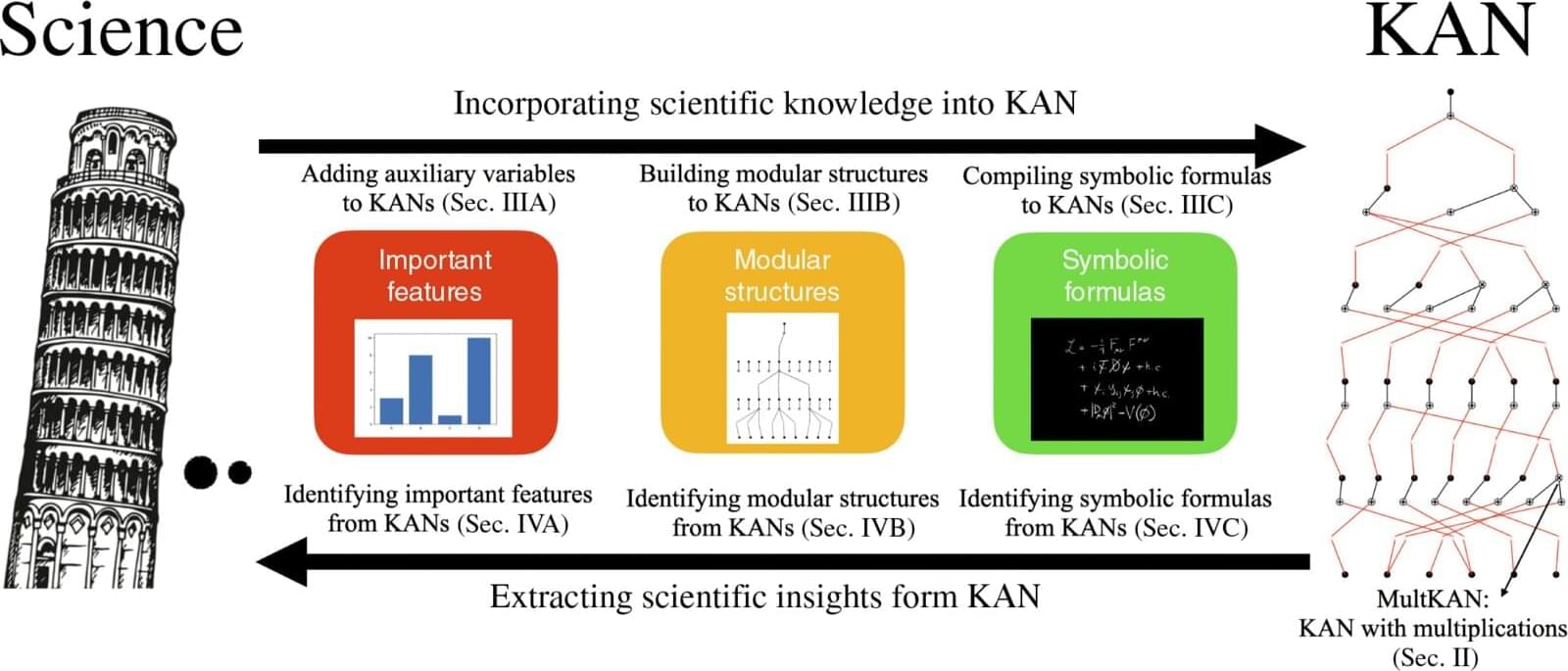
AI has successfully been applied in many areas of science, advancing technologies like weather prediction and protein folding. However, there have been limitations for the world of scientific discovery involving more curiosity-driven research. But that may soon change, thanks to Kolmogorov-Arnold networks (KANs).
A recent study, published in the journal Physical Review X, details how this new kind of neural network architecture might help scientists discover and understand the physical world in a way that other AI can’t.