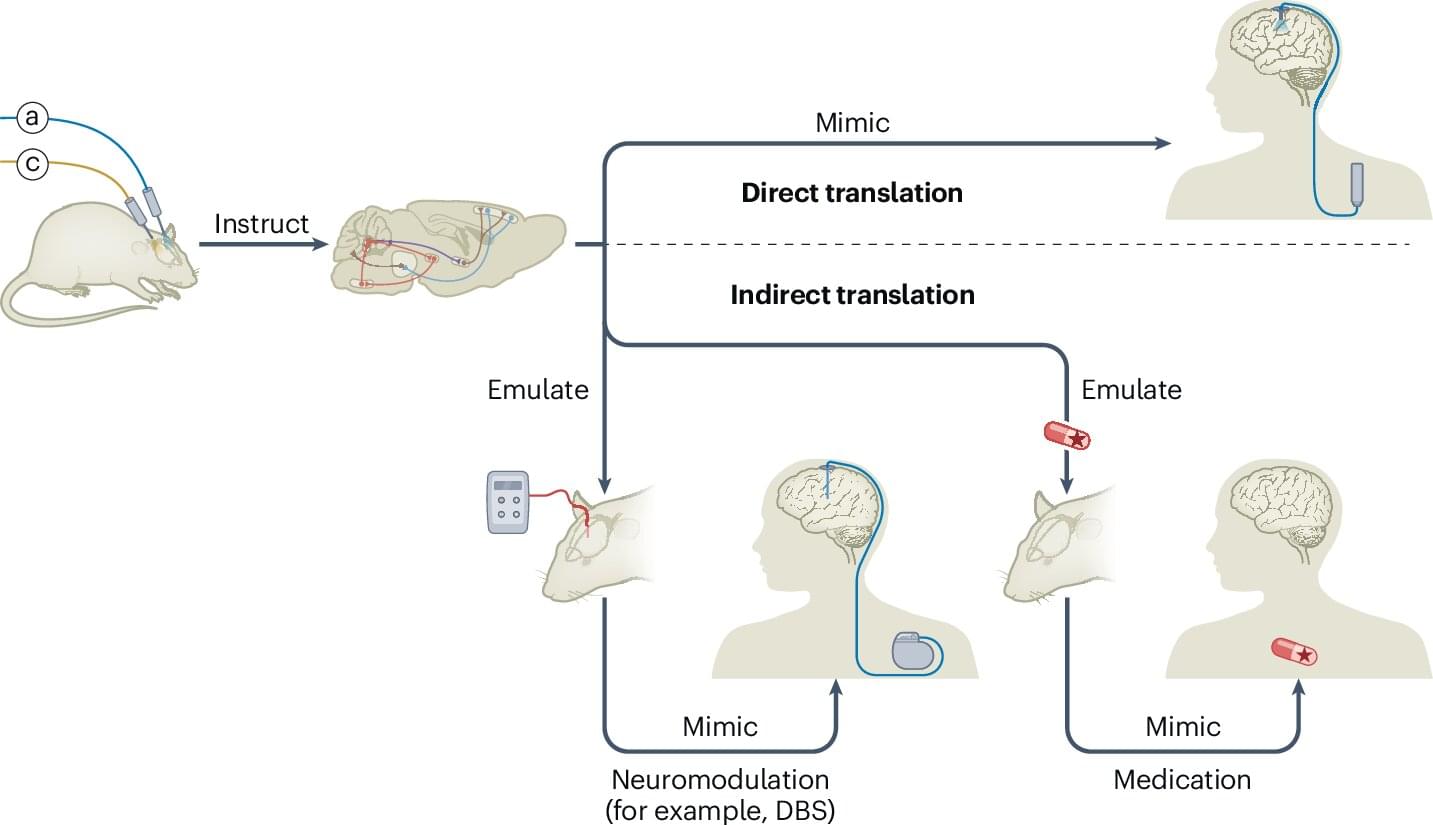
Researchers at the University of Geneva, together with colleagues in Switzerland, France, the United States and Israel, describe how optogenetic control of brain cells and circuits is already steering both indirect neuromodulatory therapies and first-in-human retinal interventions for blindness, while sketching the practical and ethical conditions needed for wider clinical use.
Optogenetic control uses light to impose temporally precise gain or loss of function in specific cell types, or even individual cells. Selected by location, connections, gene expression or combinations of these features, researchers now have an unprecedented way to investigate the brain within living animals.
Modern experiments range from implanted fiber optics to three-dimensional holographic illumination of defined neuronal ensembles and noninvasive wearable LEDs, with interventions that can run from milliseconds to chronic use and effect sizes that change rapidly with changes in light intensity.