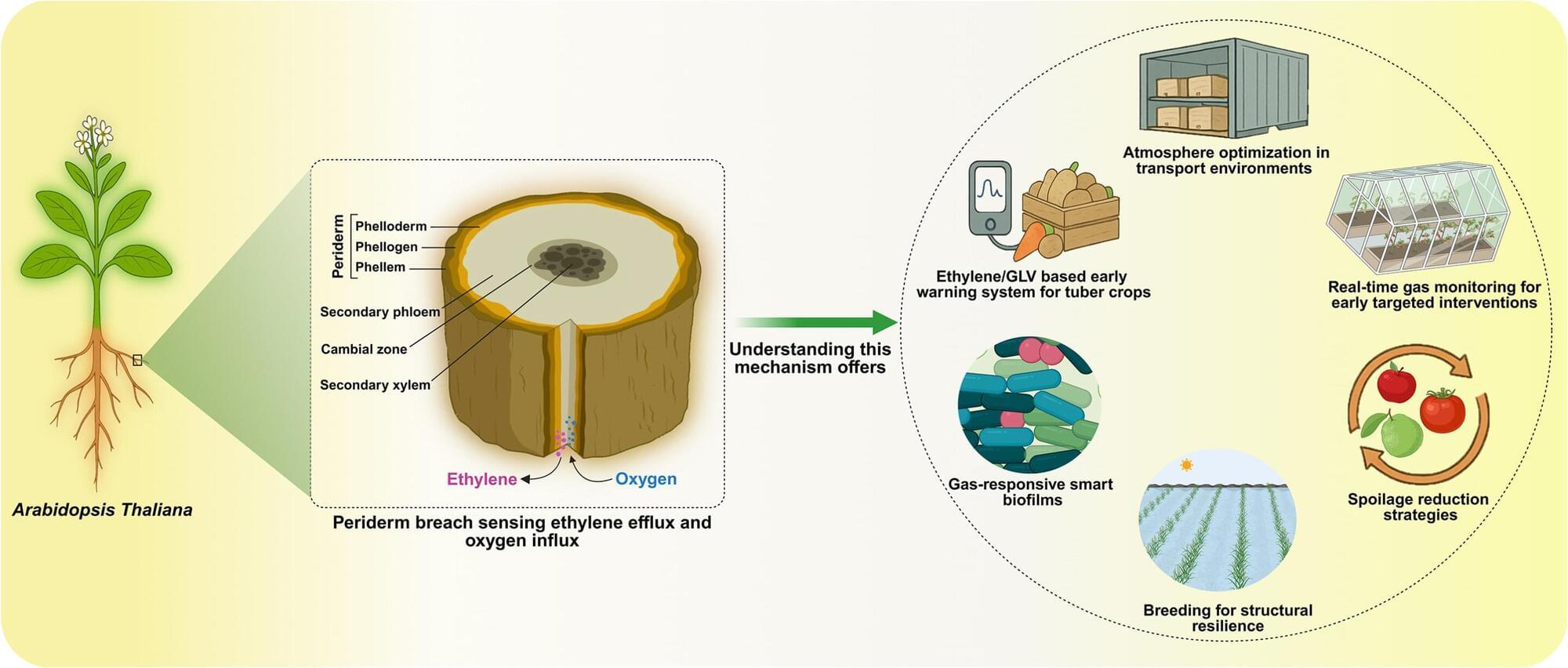
Plants have an extraordinary ability to sense tissue damage and quickly rebuild their protective outer layers, a process vital for survival amid environmental stresses. The periderm—a specialized protective tissue found in many woody plants—serves as a crucial barrier against water loss, pathogens, and mechanical injury. However, understanding how gaseous molecules enable plants to rapidly detect surface disruptions has long remained elusive.
In a new study published in Plant Communications on December 8, a research team led by Prof. Chen Yaning from the Xinjiang Institute of Ecology and Geography (XIEG) of the Chinese Academy of Sciences reported new insights into gas-regulated wound signaling in plants. By examining recent advances in the field, the researchers showed that changes in the diffusion dynamics of ethylene and oxygen within plant tissues provide an efficient and rapid means of sensing breaches in surface defenses.
“When the plant’s outer barrier is damaged, endogenous ethylene gas escapes more readily into the atmosphere (efflux), while oxygen from the environment infiltrates the tissue (influx),” said Dr. Hassan Iqbal, first author of the study.