Cancer cells often contain an abnormal number of chromosomes as a result of incorrect chromosome segregation during cell division.
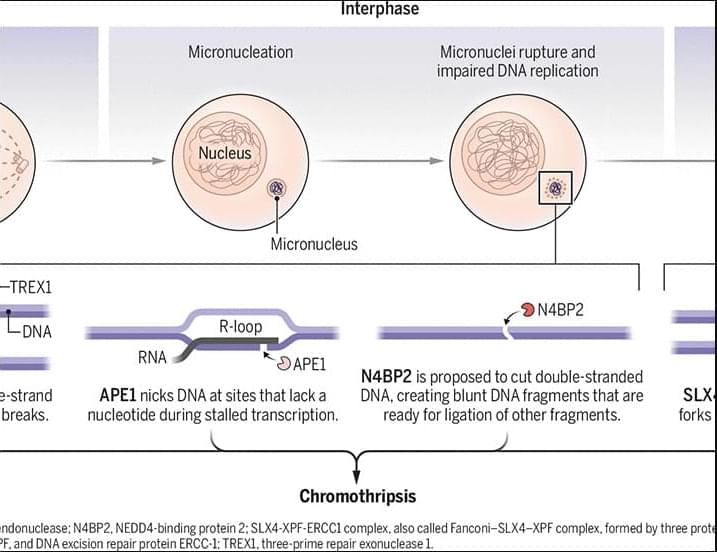
These fragments of genetic material can be encapsulated by a membrane, forming small nucleus-like structures called micronuclei. These structures often rupture, exposing chromatin (DNA and associated proteins) to the harsh environment of the cytoplasm, which can lead to large-scale DNA damage in a process called chromothripsis, or chromosome shattering and scrambling.
In a new Science study, researchers report that the cytoplasmic protein NEDD4-binding protein 2 may be responsible for chromothripsis.
Learn more in a new.
A protein that cuts double-stranded DNA contributes to chromosome scrambling in human cancer cells.
Stanley Clarke and Marcin Imieliński Authors Info & Affiliations
Science
Vol 390, Issue 6778