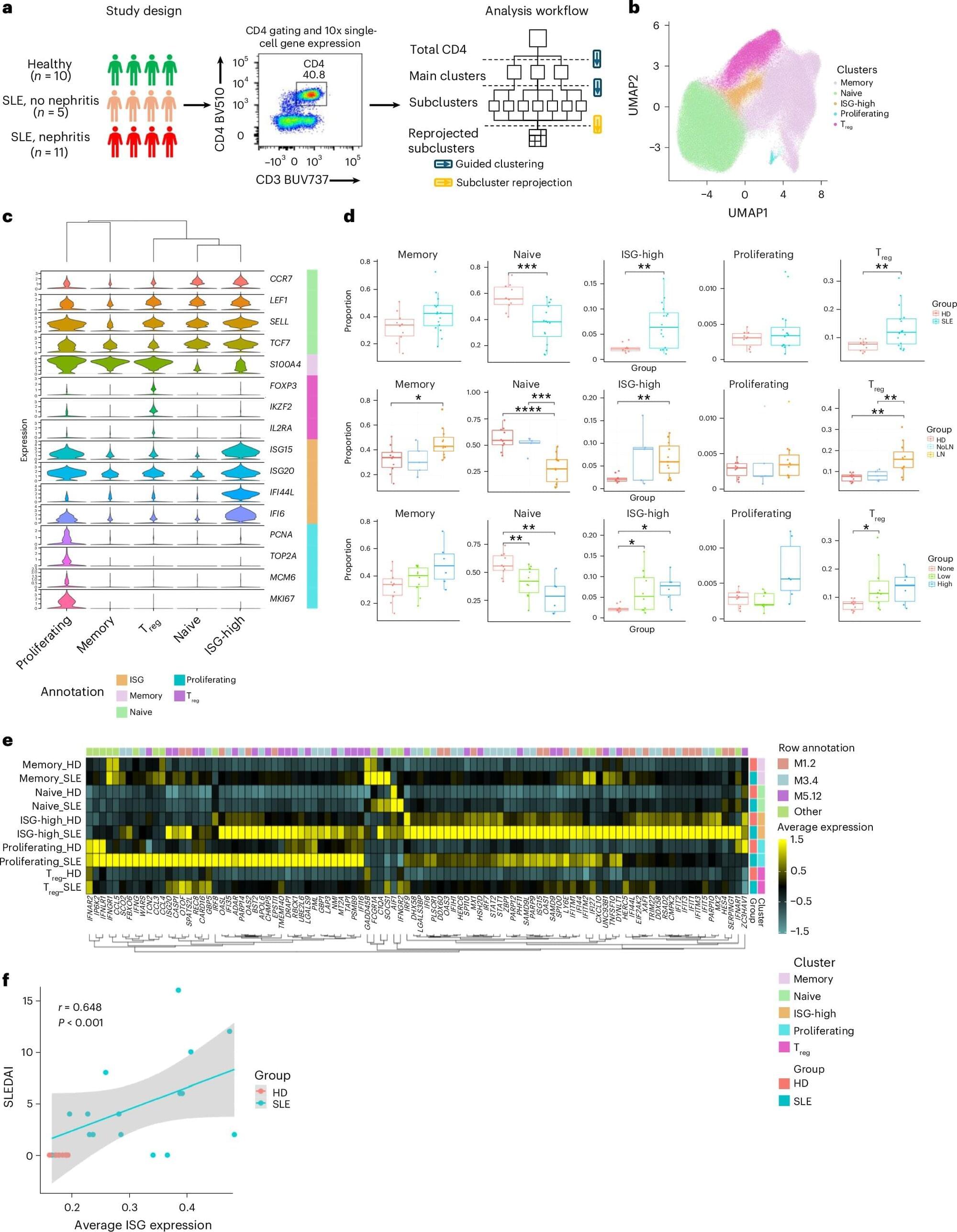
Detailed mapping of CD4⁺ T cells from children with systemic lupus erythematosus (SLE) has revealed distinct immune cell subsets with likely roles in disease pathogenesis, according to a study led by Weill Cornell Medicine investigators. The findings are poised to redirect lupus research and open the door to more precise therapies that avoid broad immune suppression.
Published in Nature Immunology, the study used single-cell RNA sequencing to profile CD4⁺ T-cell subtypes from children with SLE and healthy controls. Although CD4⁺ T cells have long been implicated in lupus, their full diversity and the identity of disease-driving subsets had not been fully defined. The authors note that the results likely apply not only to pediatric lupus but also to adult disease.
“Modulation of a particular CD4⁺ T-cell subset called Th10 might be a good strategy for treating patients with lupus, and we are following up with that goal in mind,” said study co–senior author Dr. Virginia Pascual, the Ronay Menschel Professor of Pediatrics and Gale and Ira Drukier Director of Children’s Health Research at Weill Cornell Medicine.