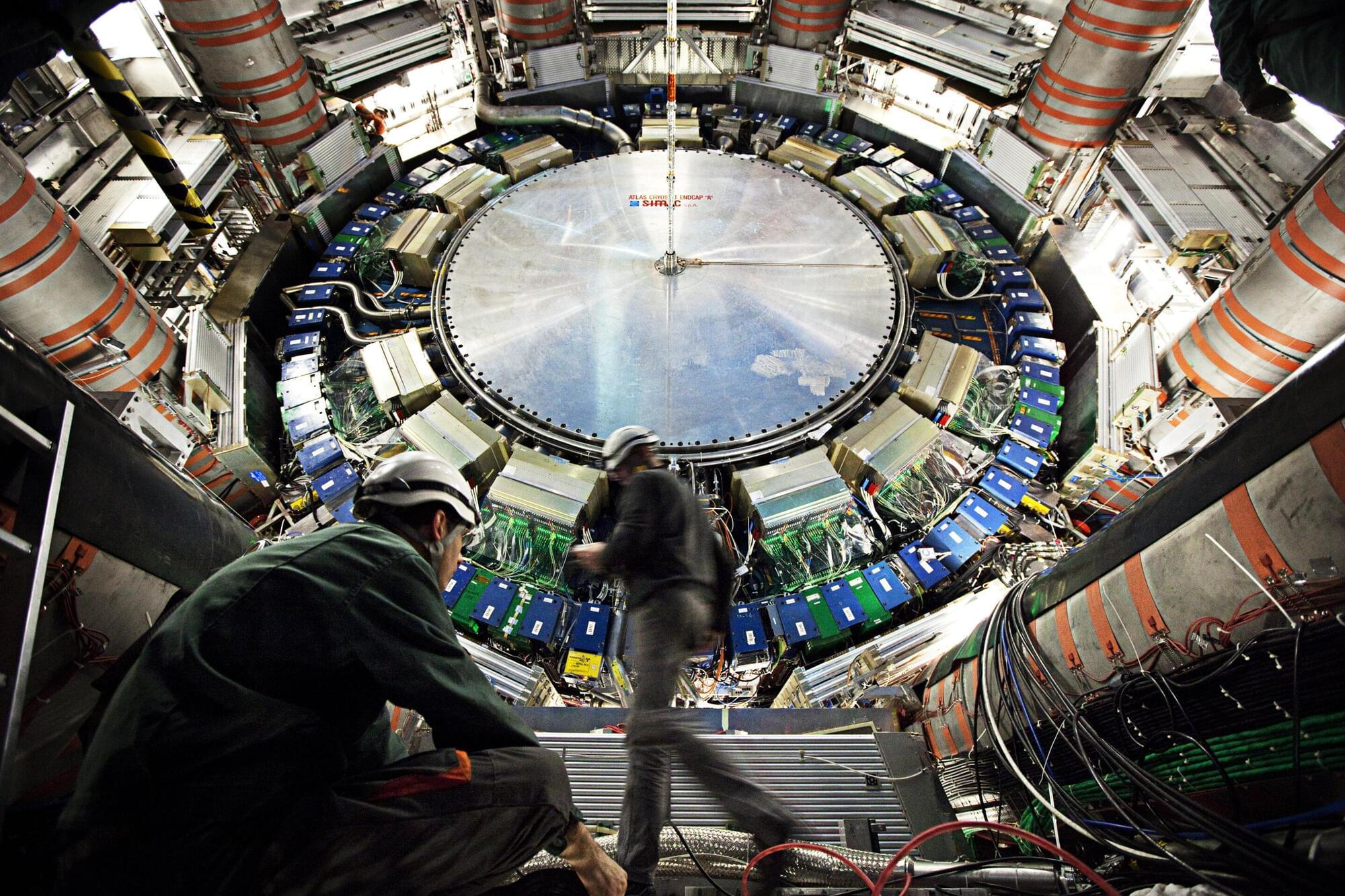
Although its existence had been theorized for decades, the Higgs boson was finally observed to exist in 2012 at the Large Hadron Collider (LHC) at CERN. Since then, it has continued to be heavily studied at the LHC. Now, a new study from the researchers at CERN combines the last two runs of ATLAS—one of the two general-purpose detectors at the LHC—to lay out evidence that the Higgs boson can decay into a muon–antimuon pair.
The study, published in Physical Review Letters, reports a significance of 3.4 standard deviations of excess signal over background, when the two runs are combined—higher than previous evidence from the Compact Muon Solenoid (CMS) of 3.0 standard deviations.