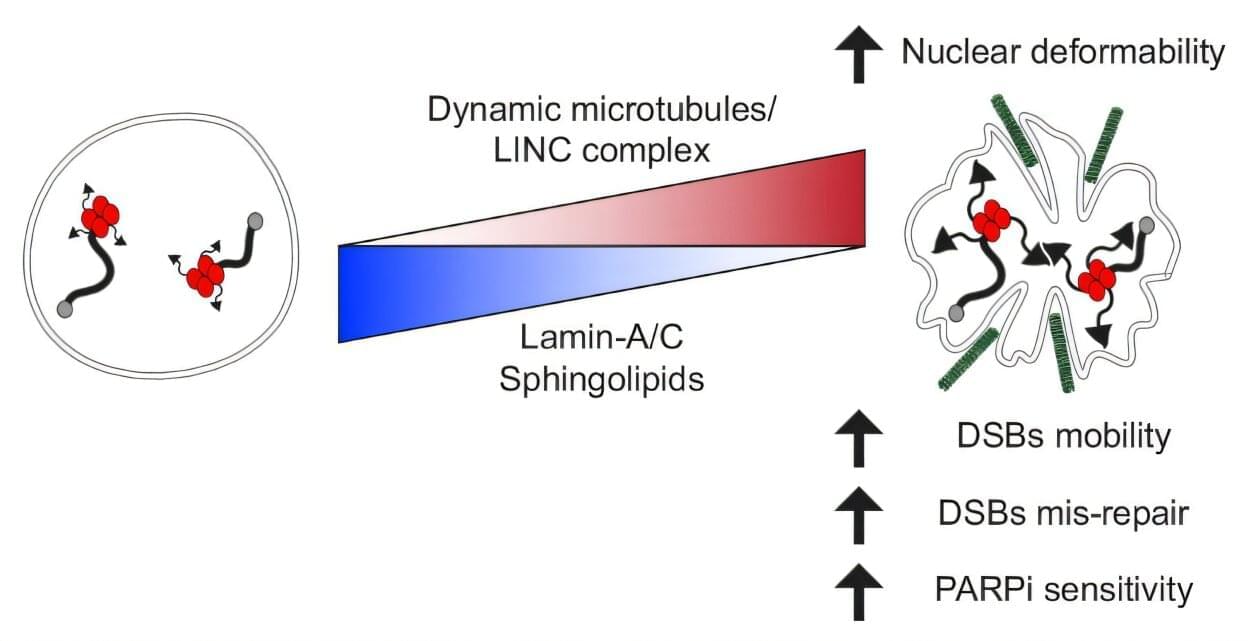
Cancer cells with a cell nucleus that is easily deformed are more sensitive to drugs that damage DNA. These are the findings of a new study by researchers at Linköping University in Sweden. The results may also explain why combining certain cancer drugs can produce the opposite of the intended effect. The study has been published in the journal Nature Communications.
A few years ago, a new type of drug was introduced that exploits deficiencies in cancer cells’ ability to repair damage to their DNA. These drugs, called PARP1 inhibitors, are used against cancers that have mutations in genes involved in DNA repair, such as the breast cancer gene 1 (BRCA1).
This gene has such a central role in the cell’s ability to repair serious DNA damage that mutations in it greatly increase the risk of developing cancer, often at a young age. The risk is so high that some women with a mutated BRCA1 gene choose to have their breasts and ovaries surgically removed to prevent cancer.